OUR WORK
PIPE FENCE, CORRALS
& ARENAS
PIPE FENCE, CORRALS & ARENAS
STEEL THAT OUTLASTS EVERYTHING ELSE ON YOUR PROPERTY
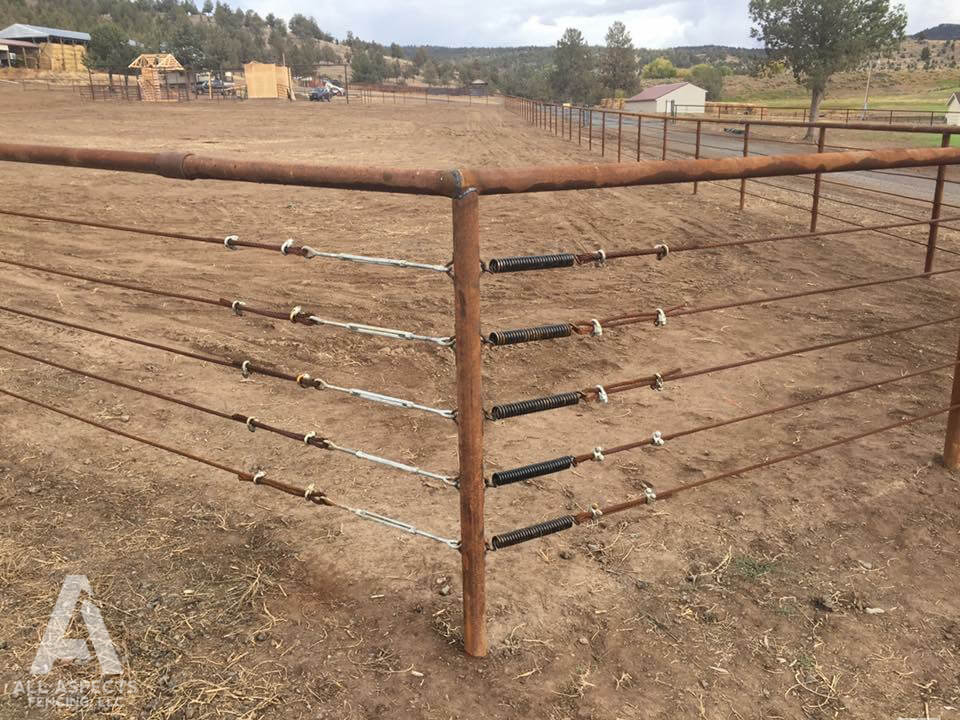
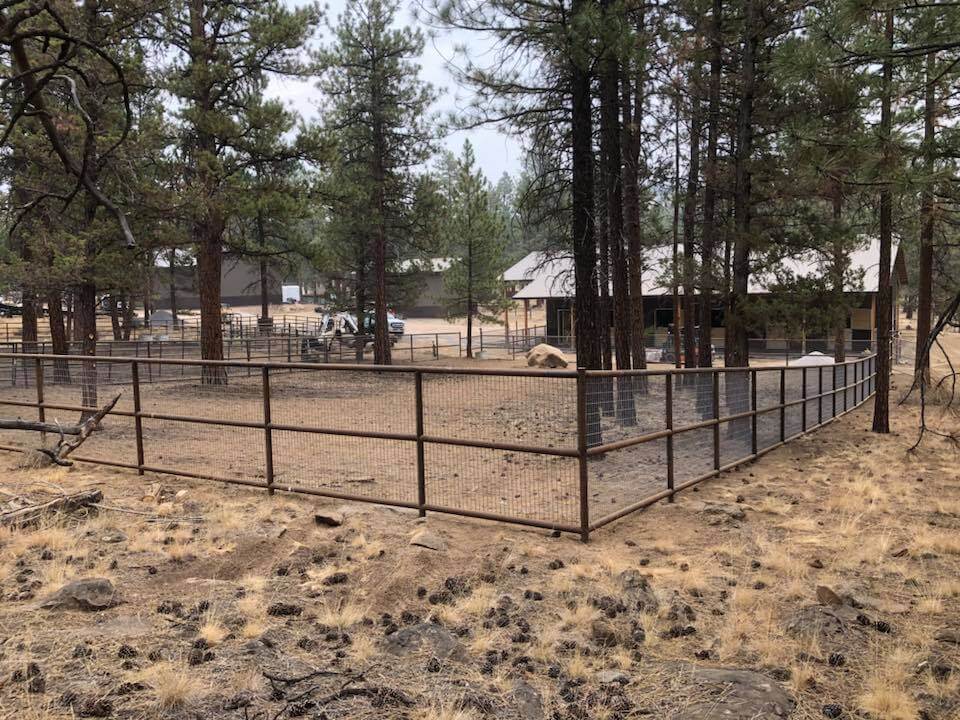
Pipe fence is about as close to permanent as agricultural fencing gets. No painting, no replacing rotted boards, no stapling back loose wire. A properly installed pipe fence in Central Oregon will outlast the original owner of the property and still be standing straight. All Aspects Fencing installs pipe fence for pasture perimeters, driveways, horse pens, corrals, arenas, and working cattle facilities throughout the region.
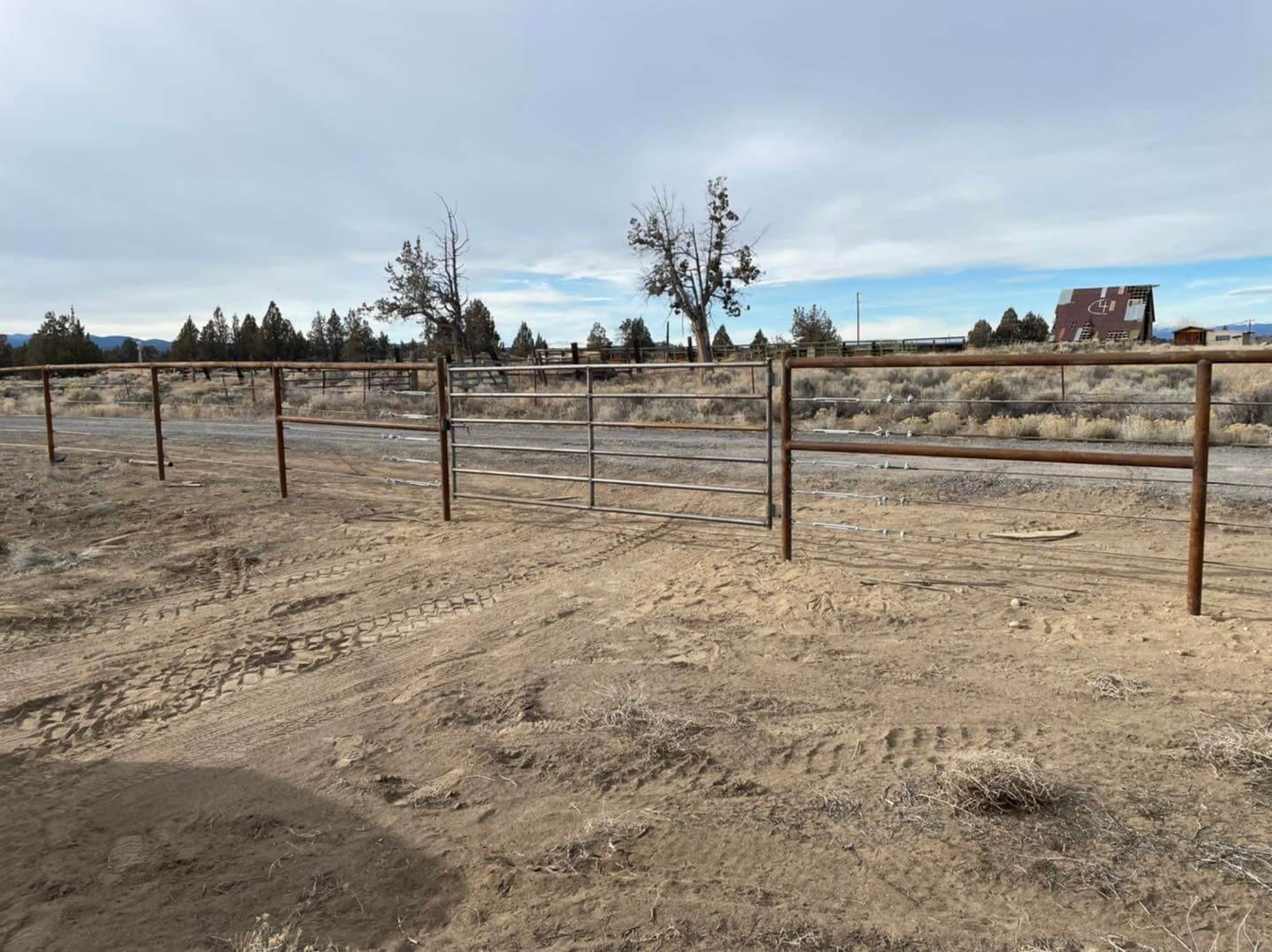
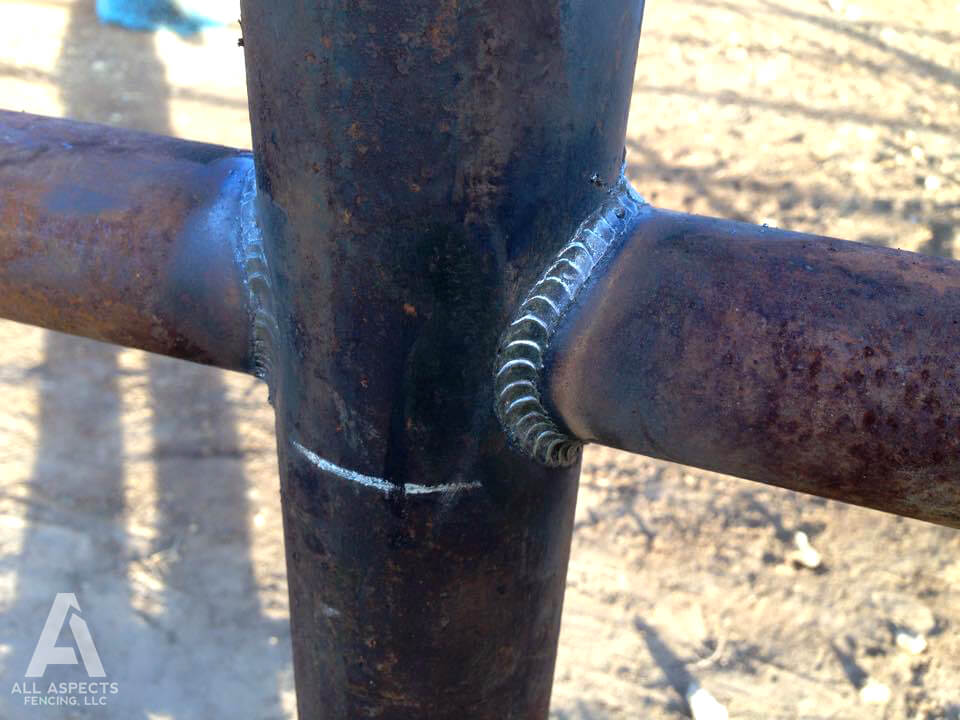
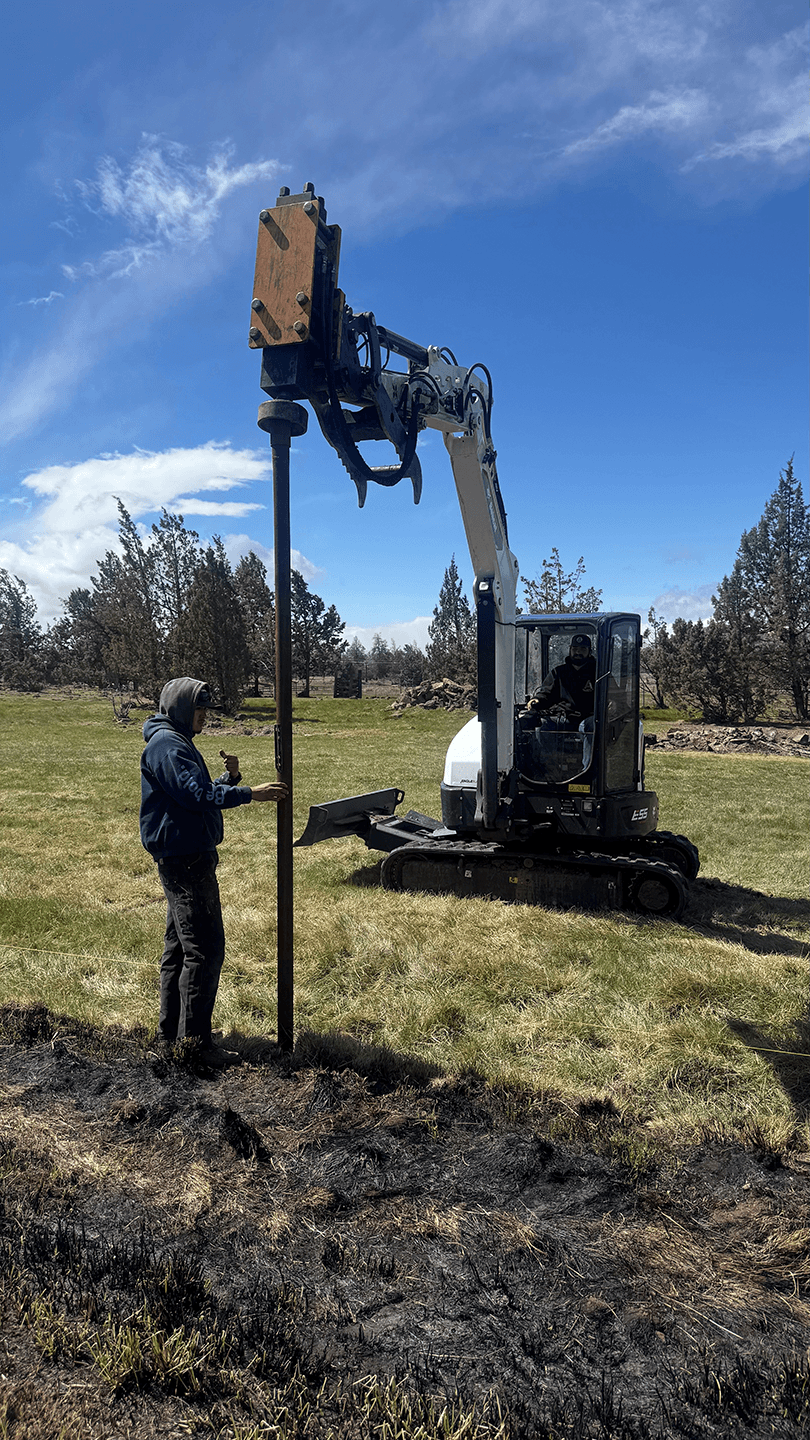
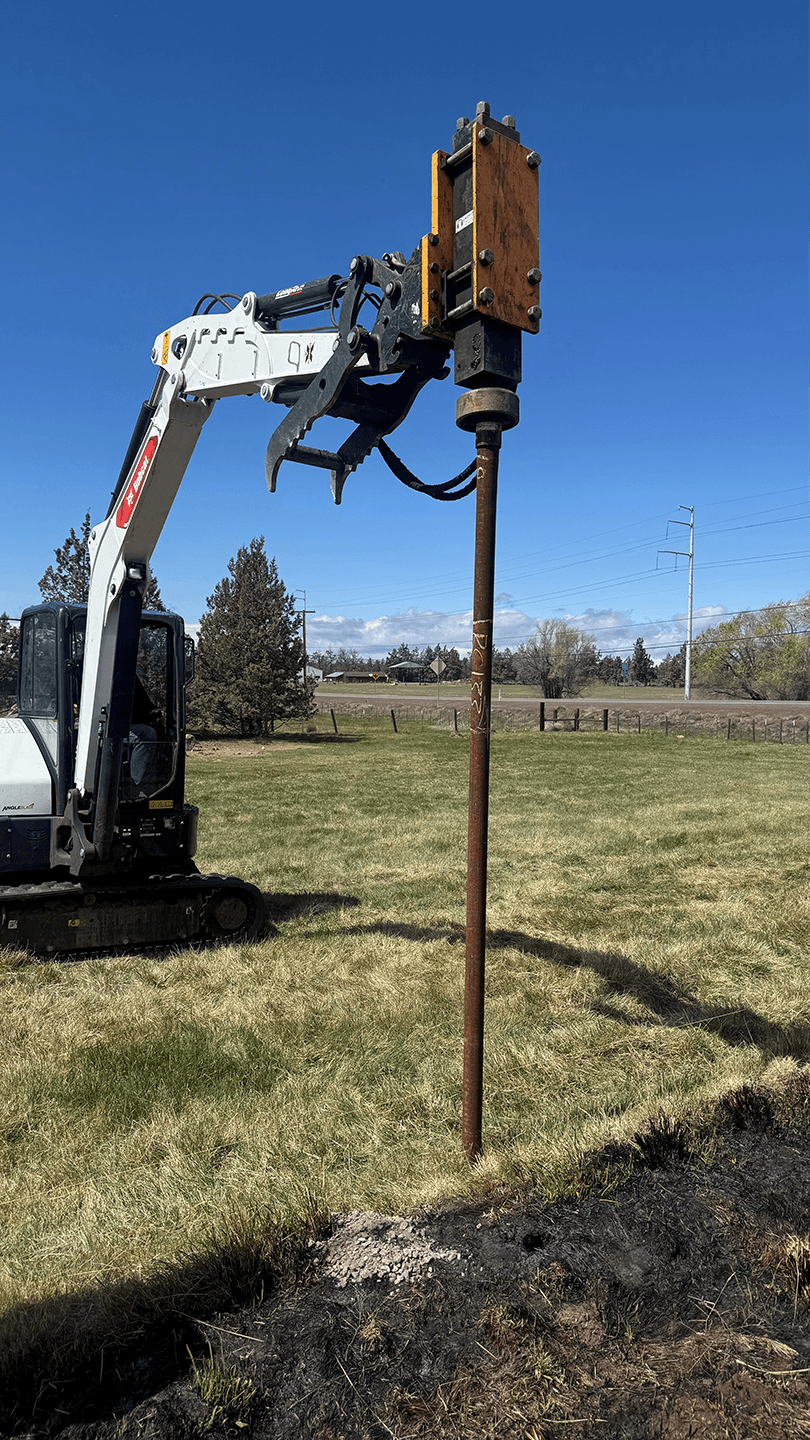
We install pipe fence two ways depending on the site and application. Driven post pipe fence uses a hydraulic post driver to pound posts directly into the ground without drilling or concrete. This is fast, cost-effective, and performs well in most Central Oregon soils. Welded pipe fence involves welding horizontal rails directly to the posts, which produces a cleaner look and a stiffer structure suited for corrals, arenas, and any application where the fence will take repeated impact from animals.
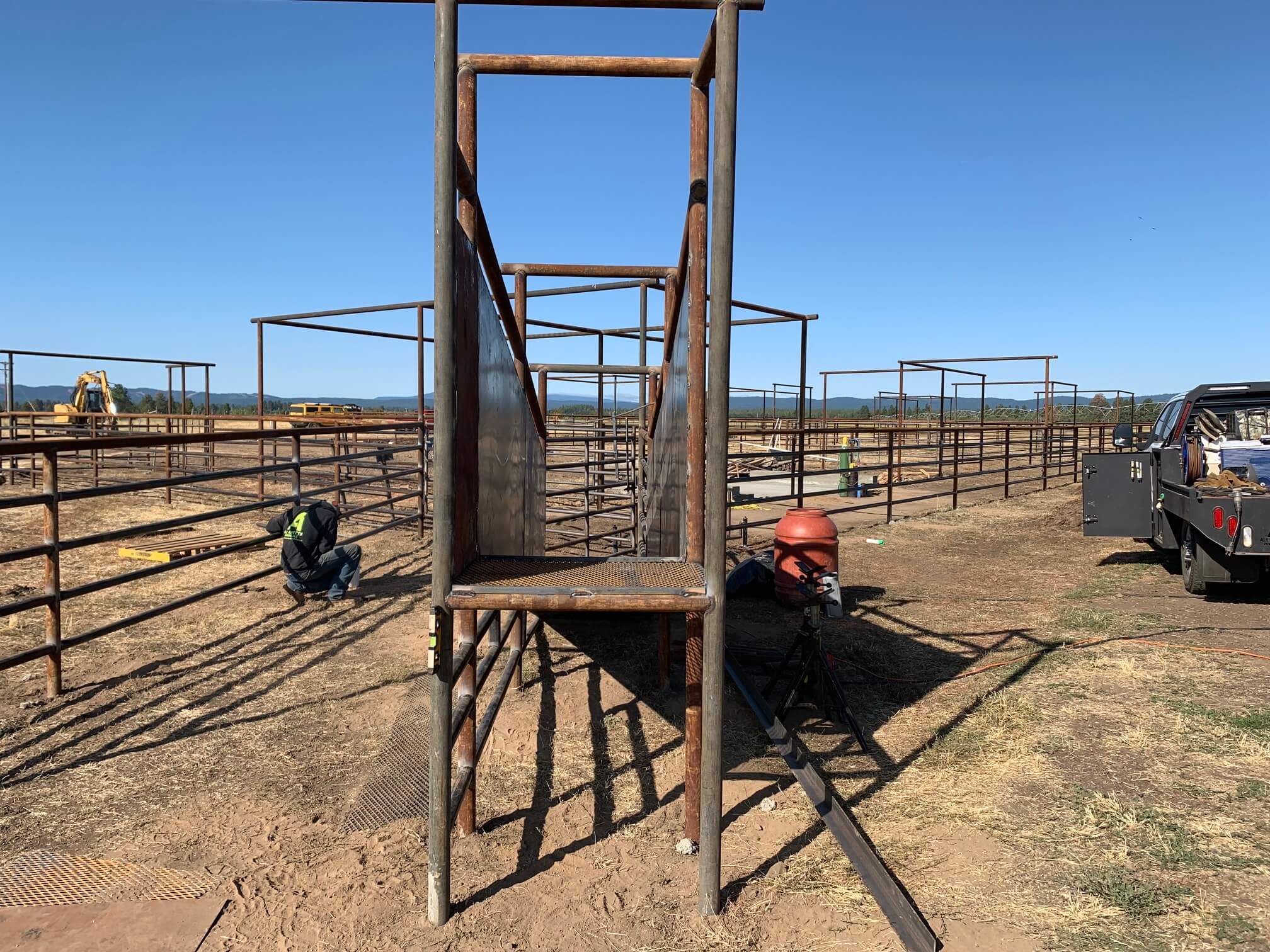
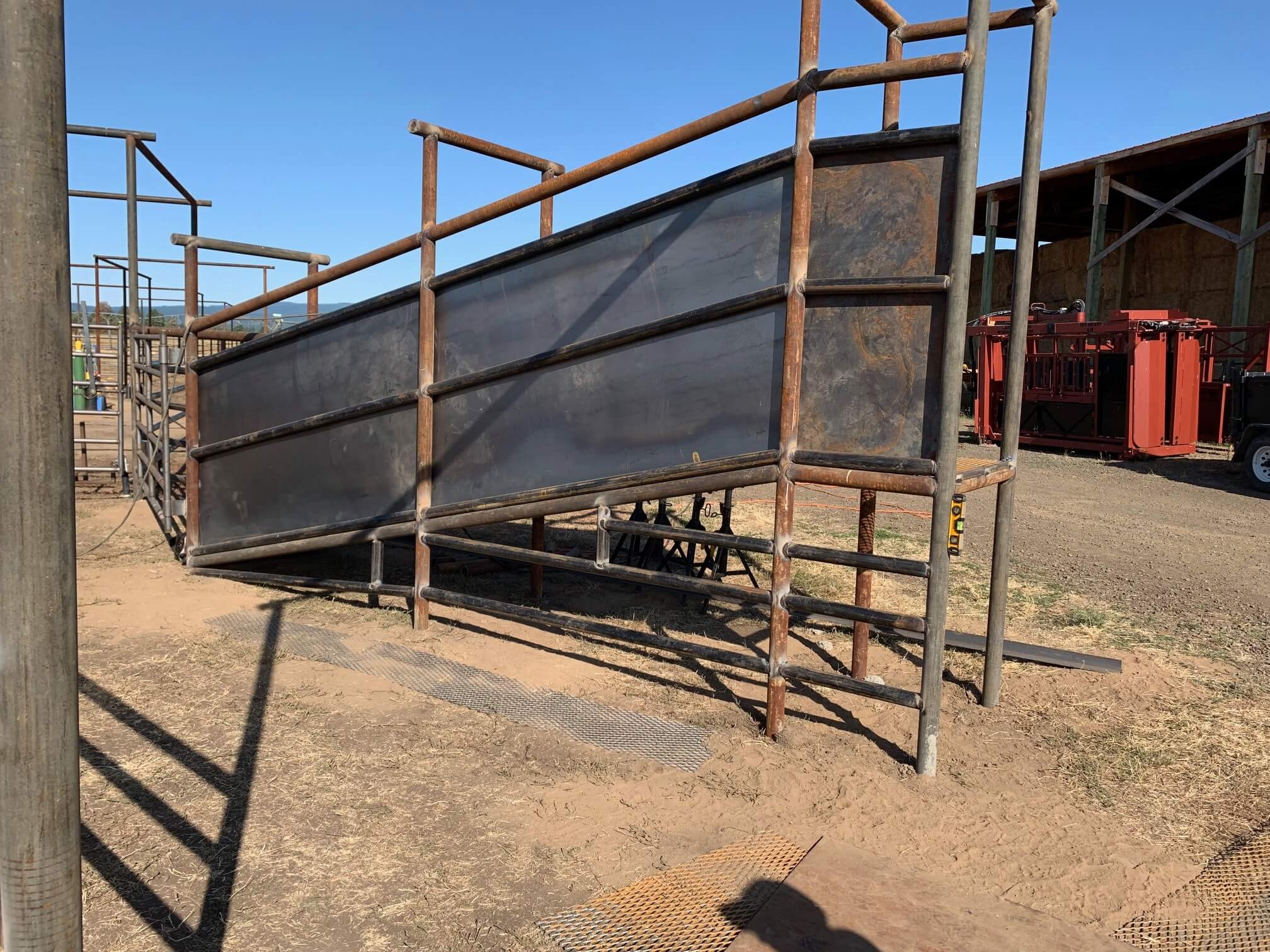
Beyond standard rail fence, All Aspects Fencing designs and builds complete corral systems, roping arenas, round pens, working cattle facilities, and custom steel fabrications including feed bunks, loading chutes, sweep tubs, and crowding alleys. If it involves steel pipe and agricultural use, this is work we do and genuinely enjoy.
PIPE FENCE
PASTURES, DRIVEWAYS & PROPERTY LINES
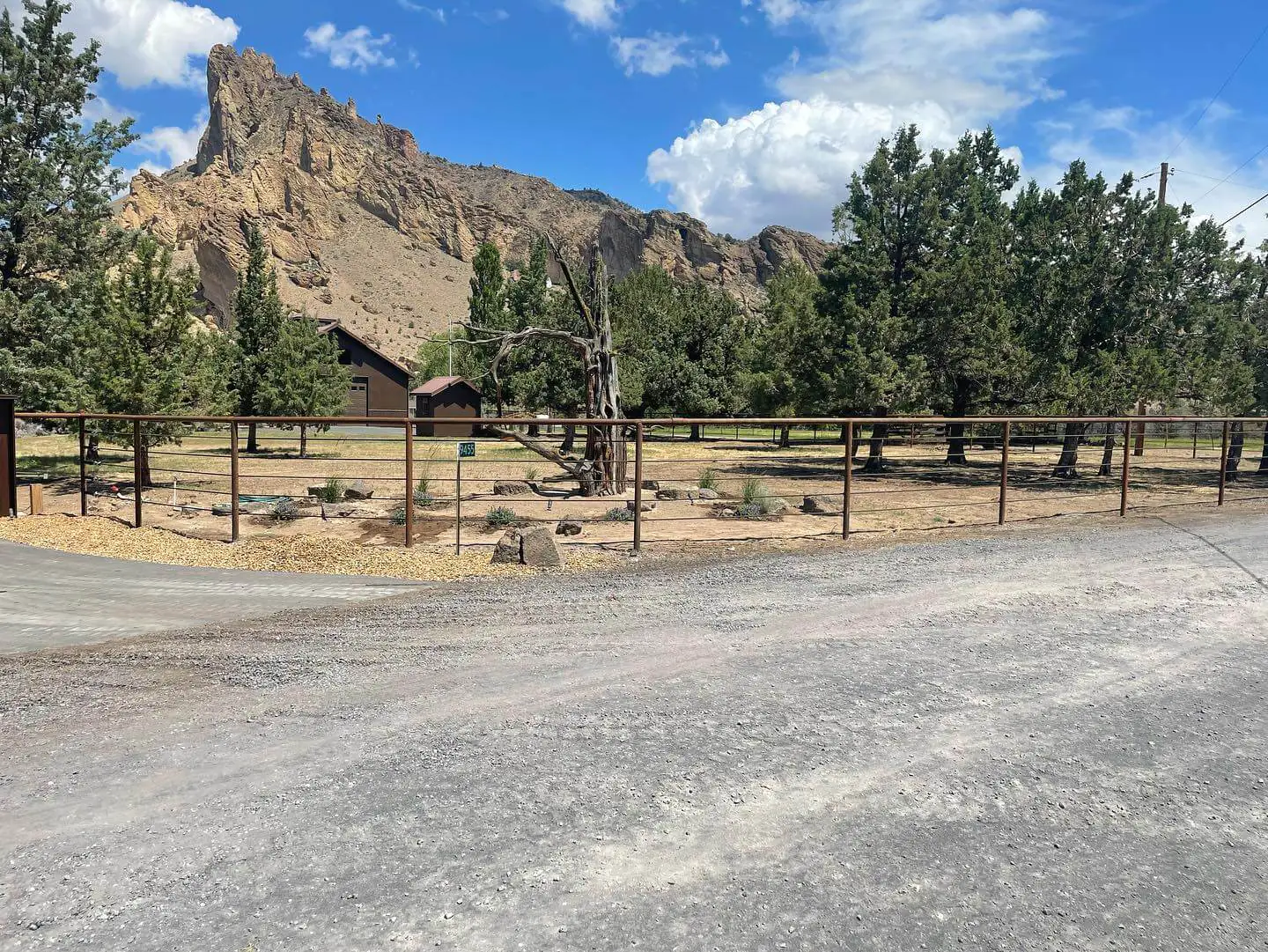
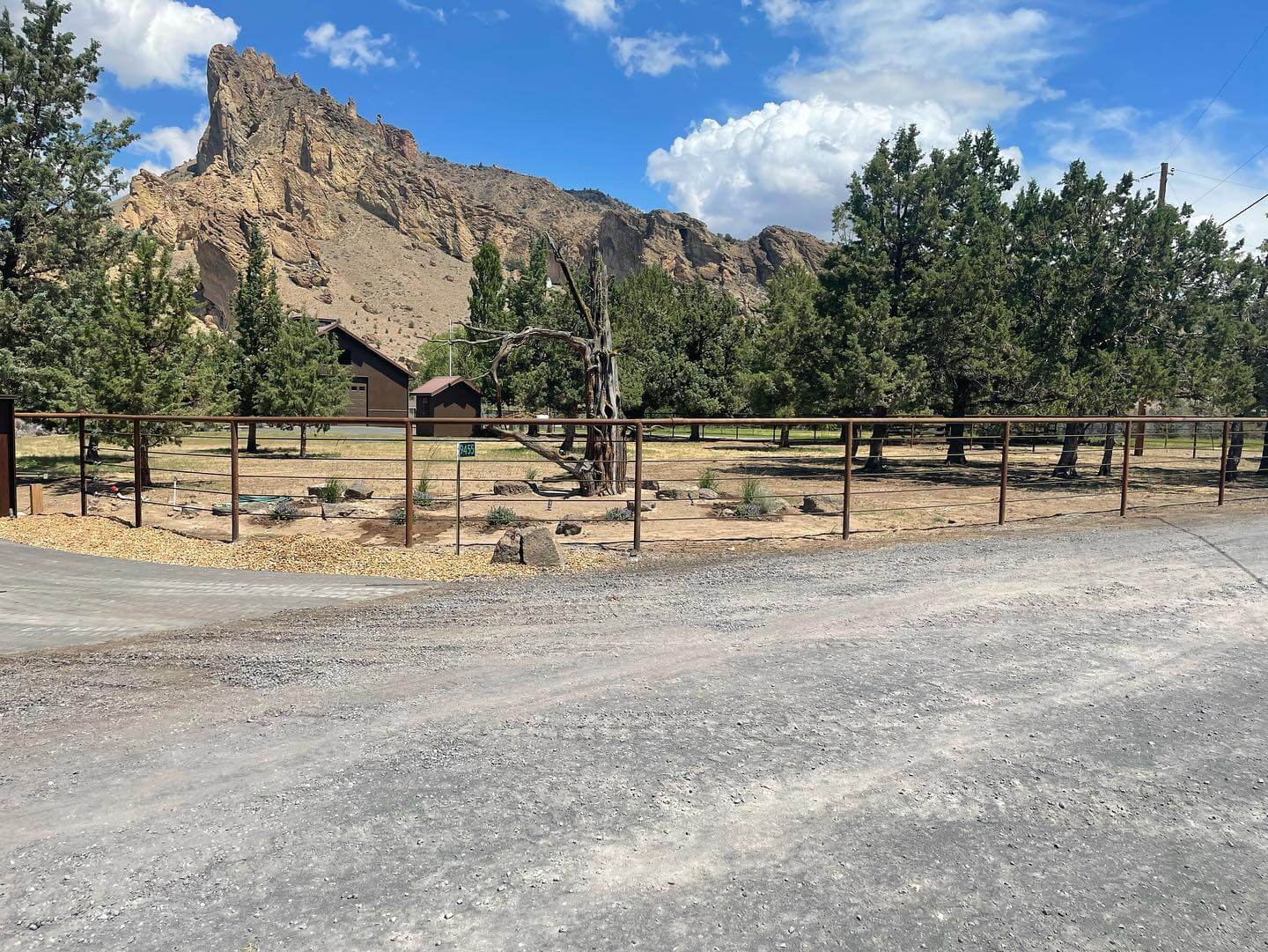
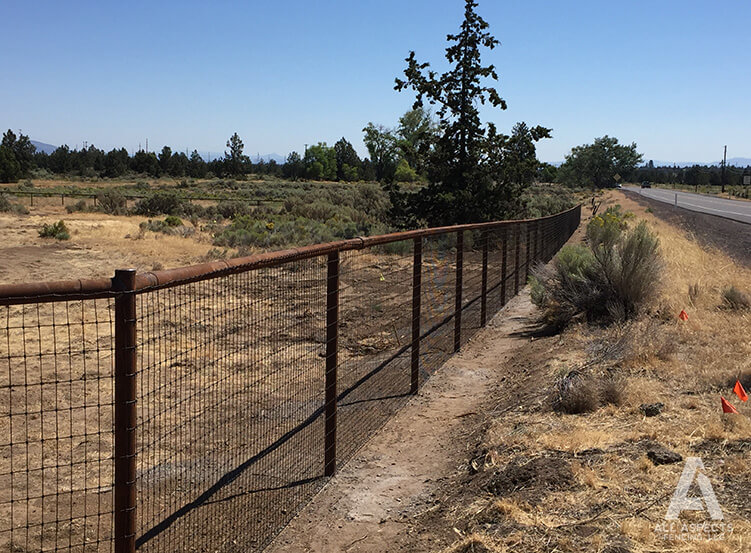
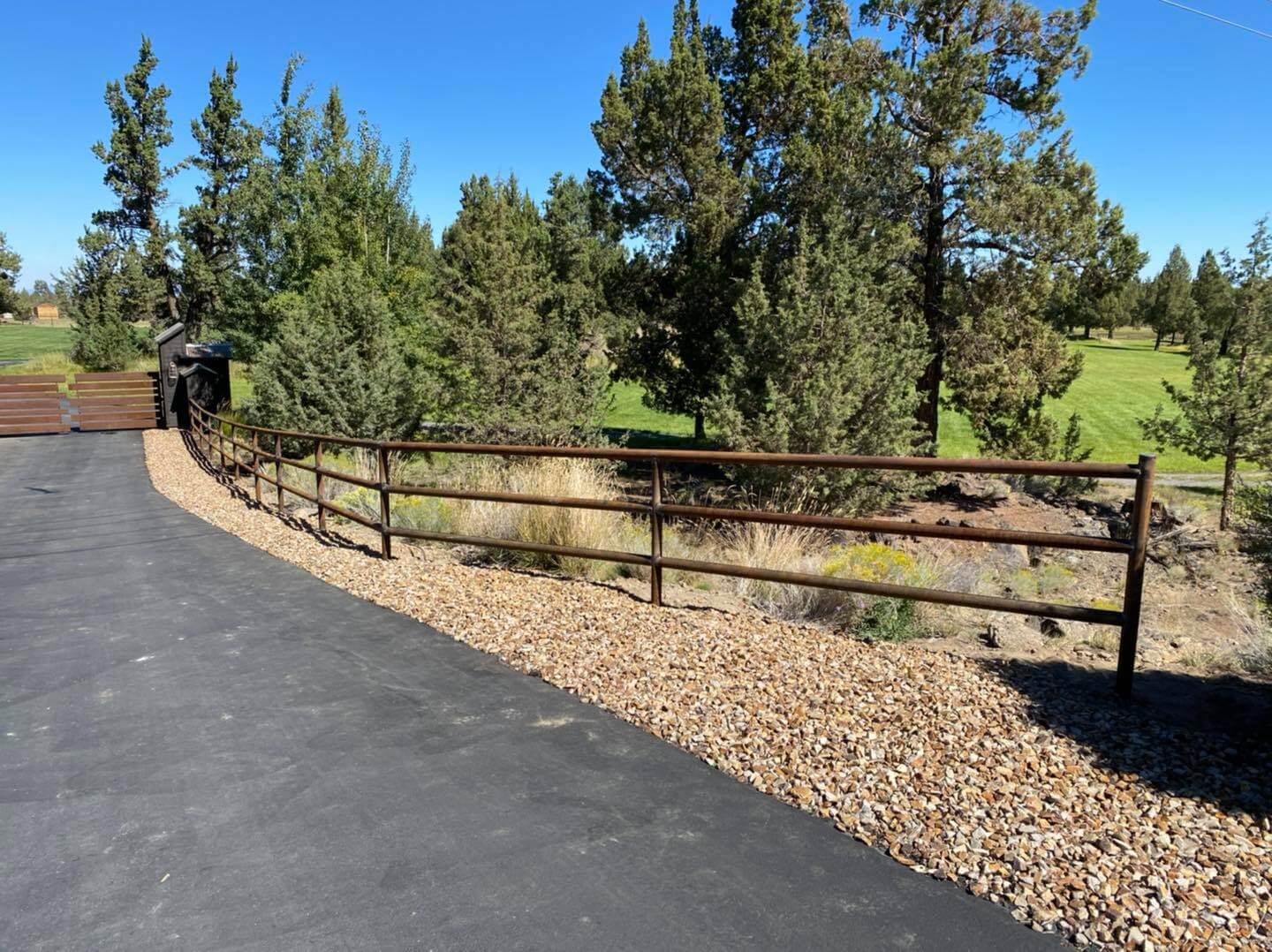
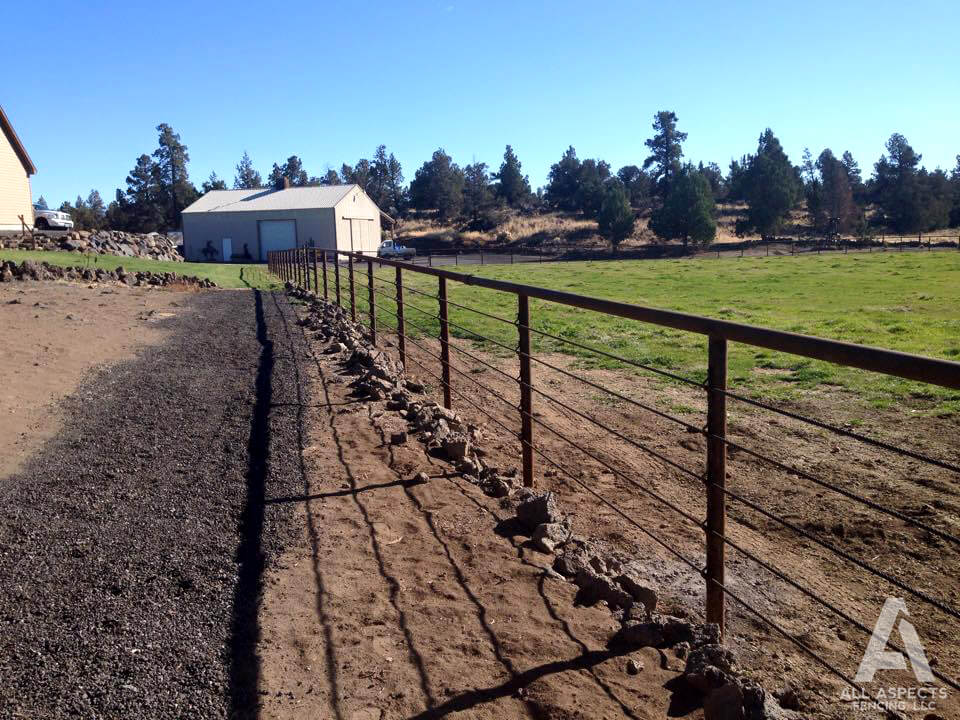
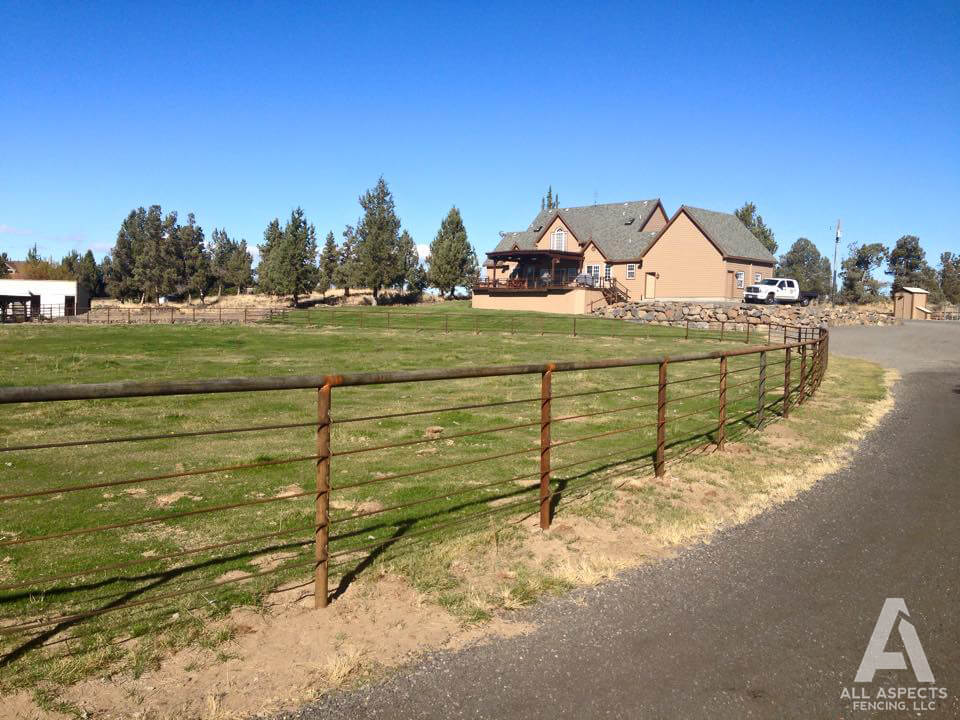
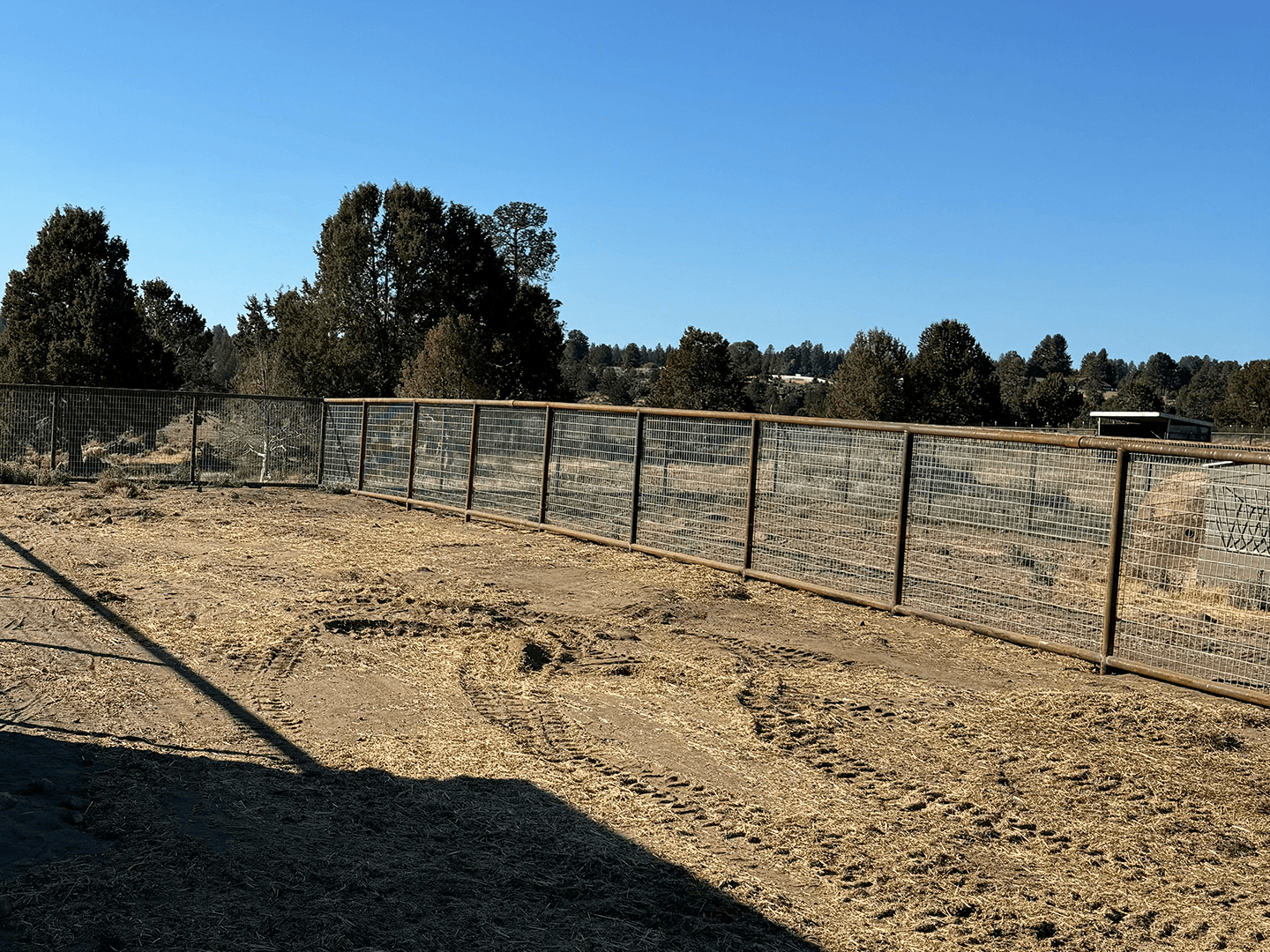
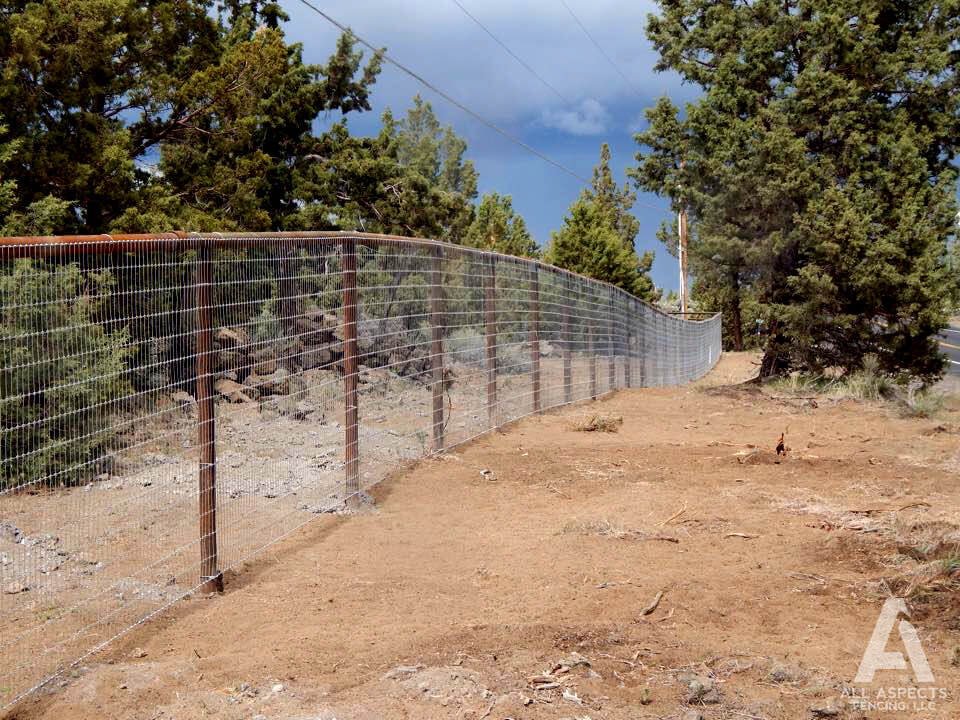
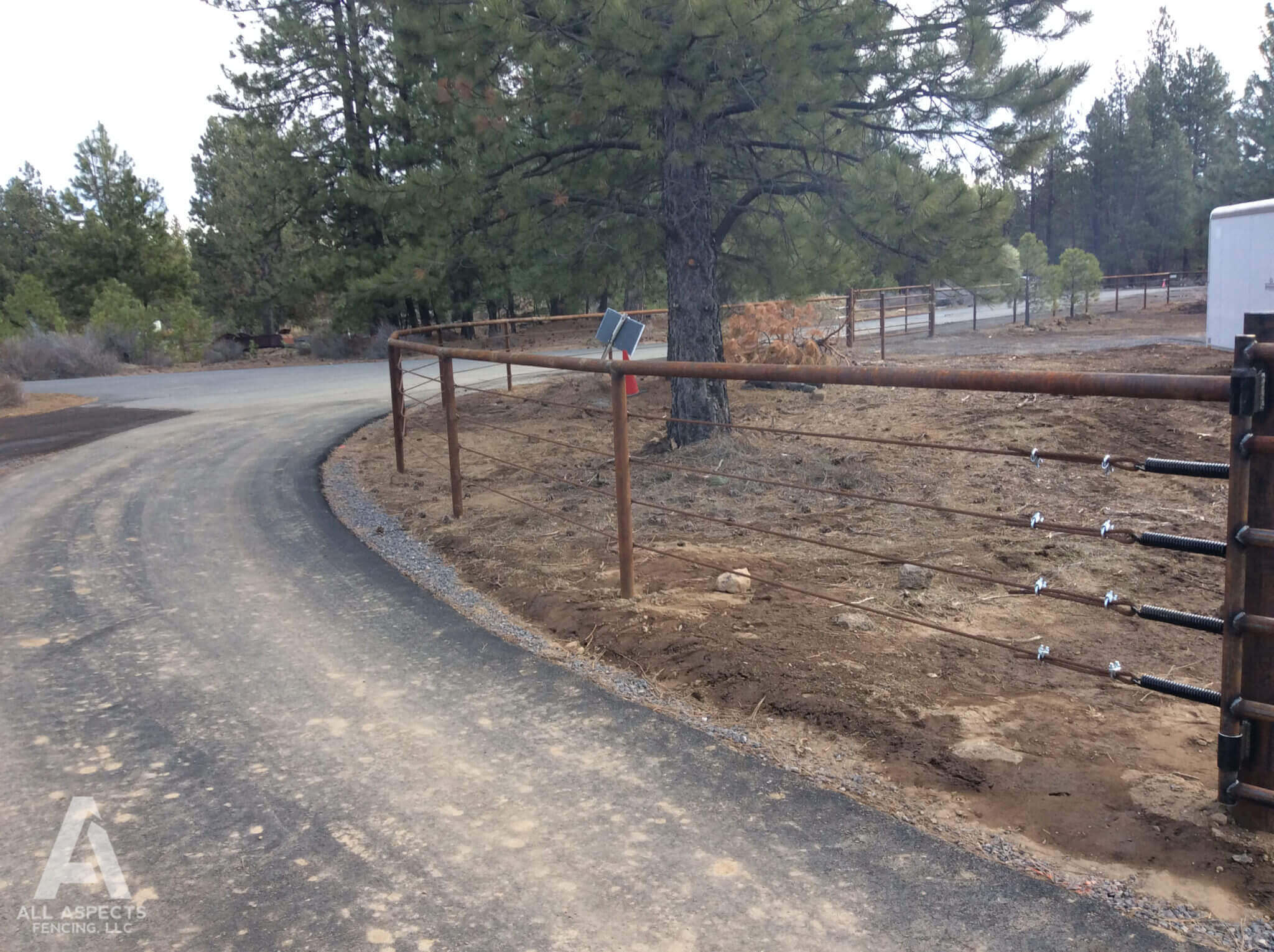
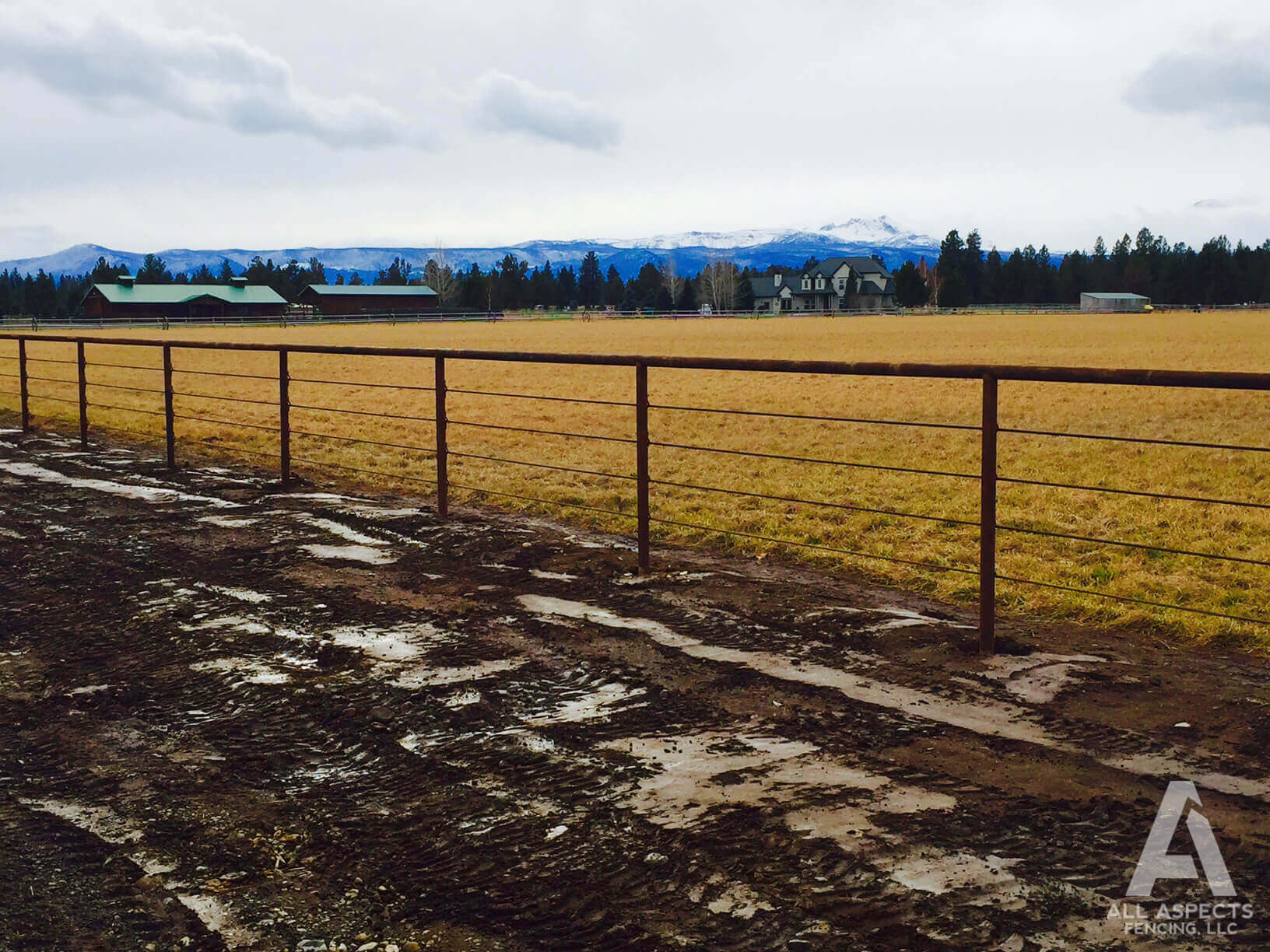
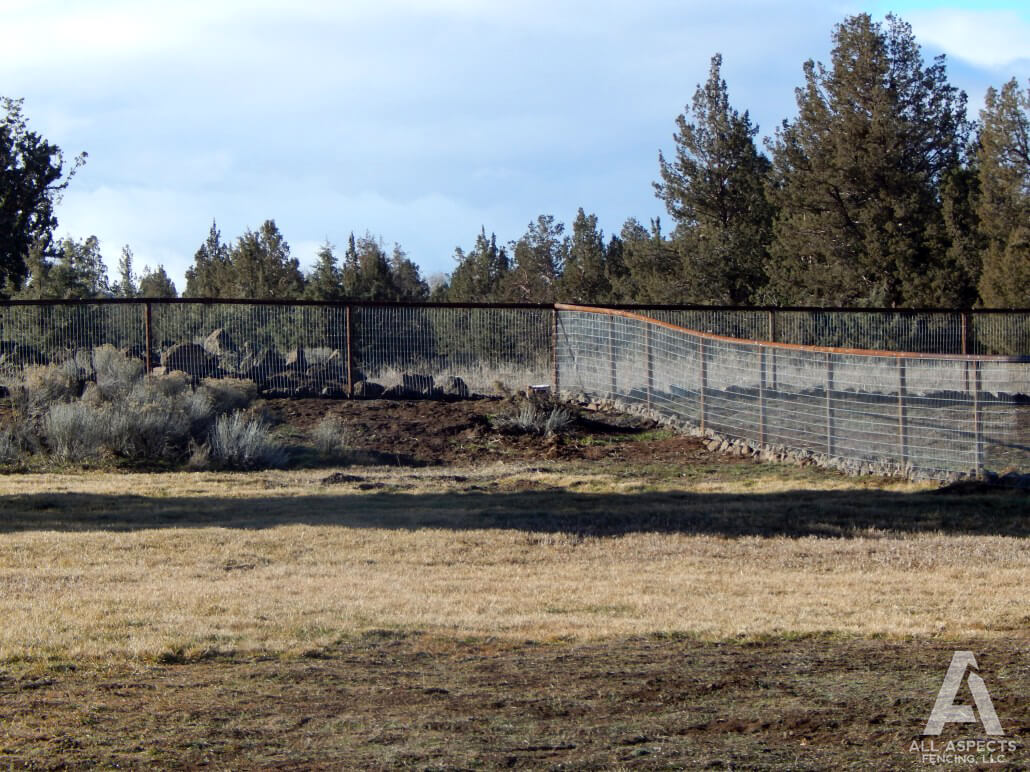
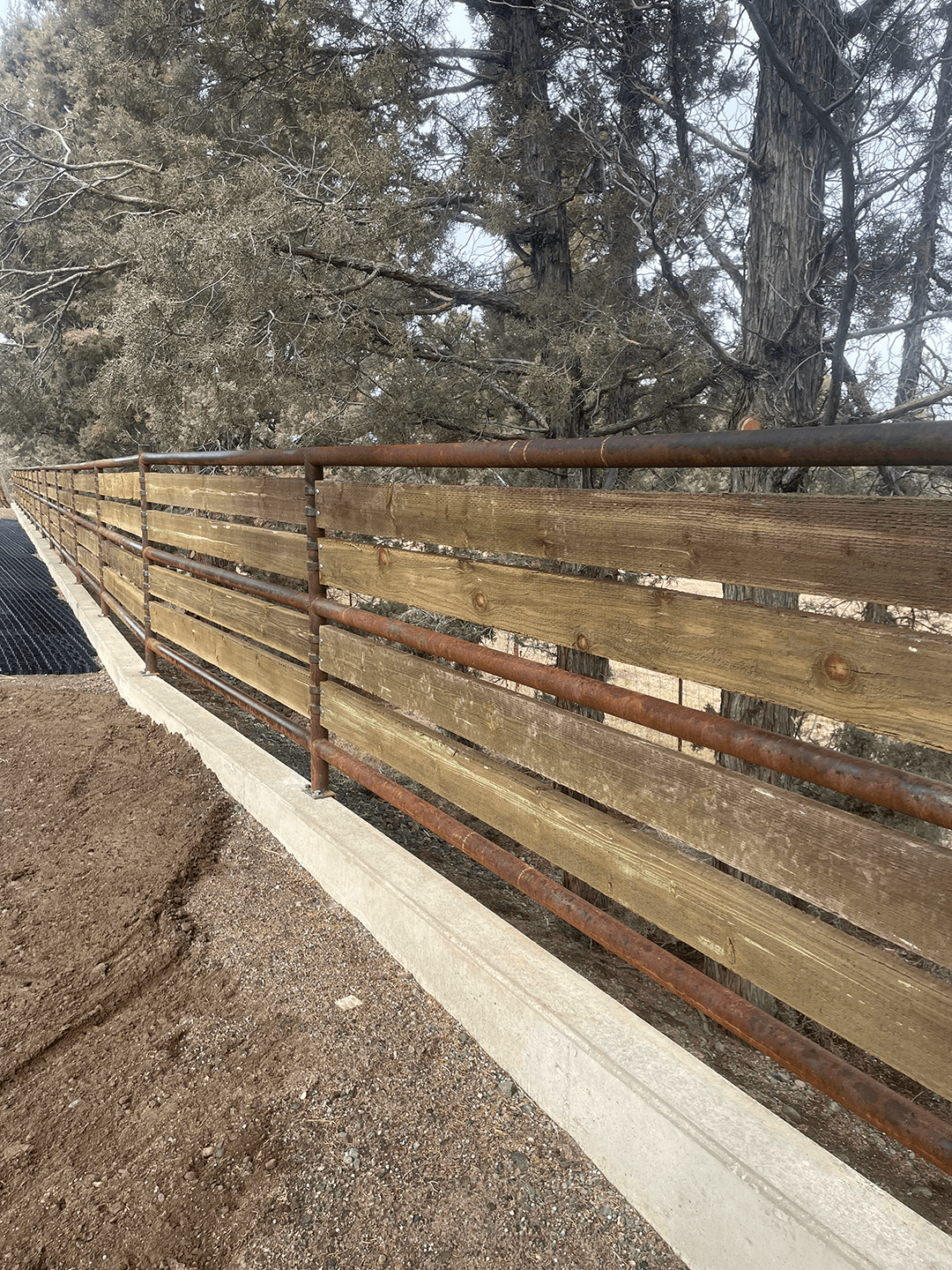
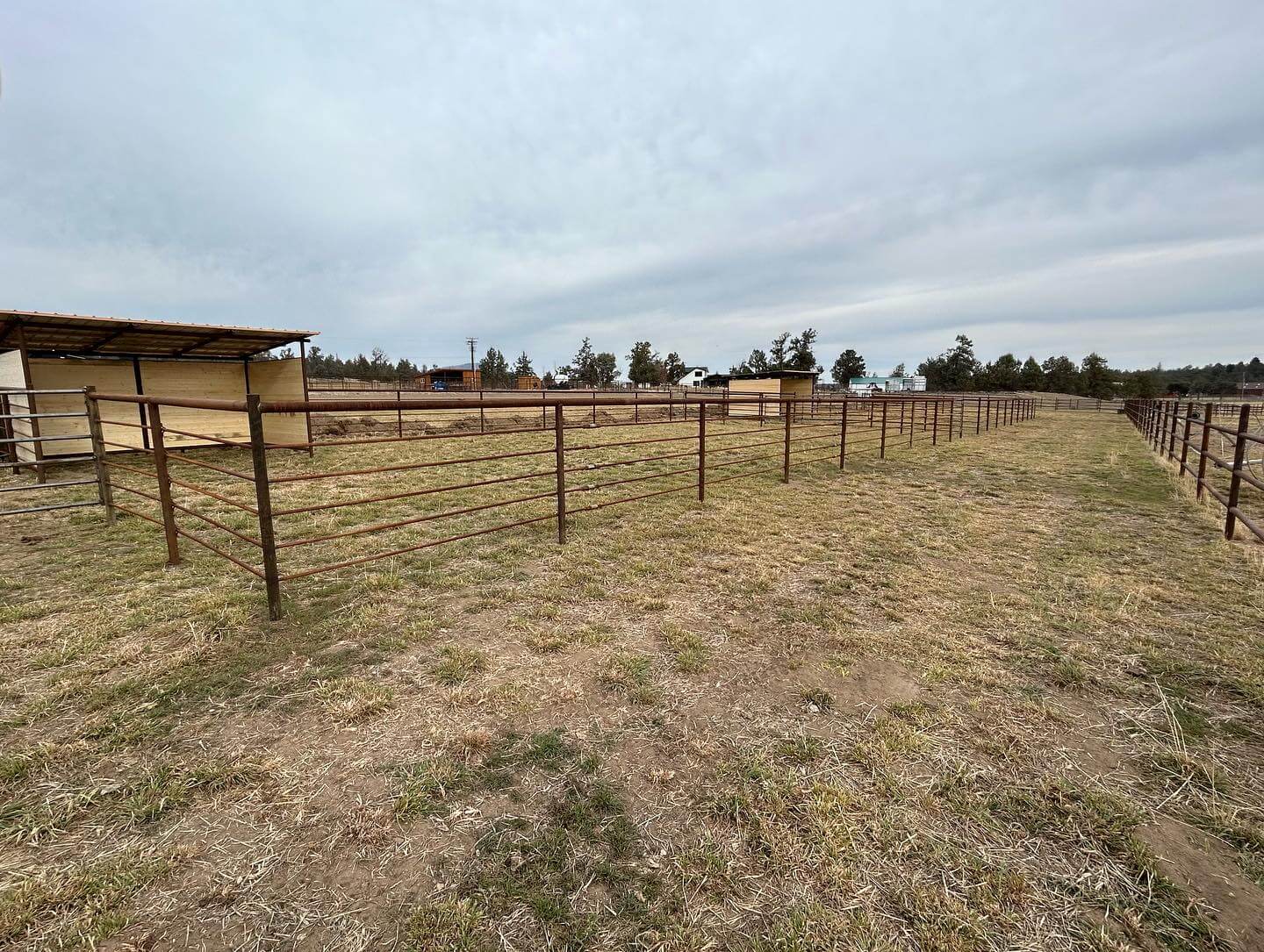
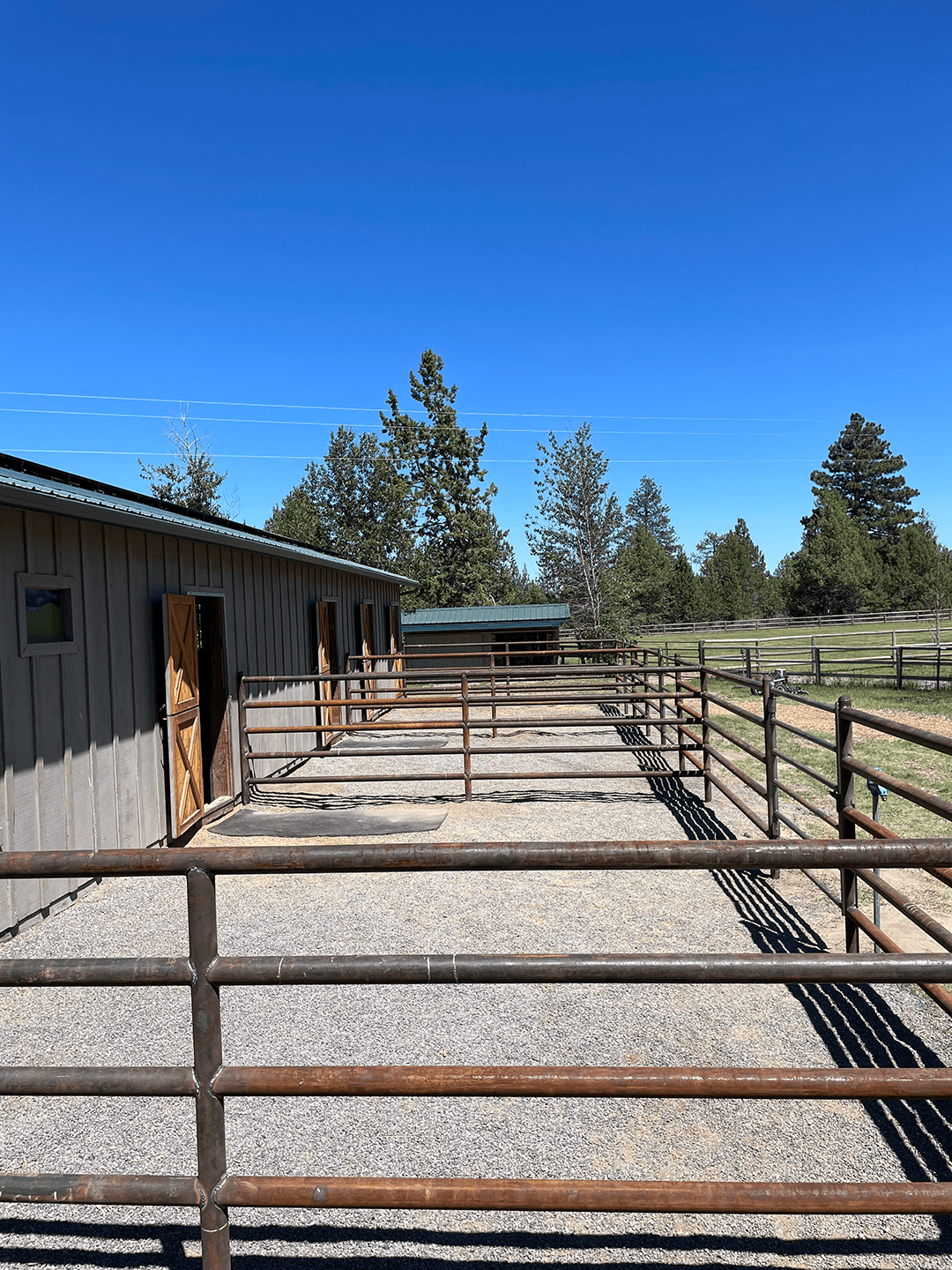
From a simple three-rail perimeter to a five-rail horse fence along a driveway, pipe fence is the workhorse of Central Oregon agricultural properties. We install 2-inch, 2-3/8-inch, and 2-7/8-inch pipe depending on the rail count, post spacing, and use case. Posts are driven or set in concrete depending on soil conditions and the needs of the project.

CORRALS AND HORSE PENS
DESIGNED TO WORK, BUILT TO LAST
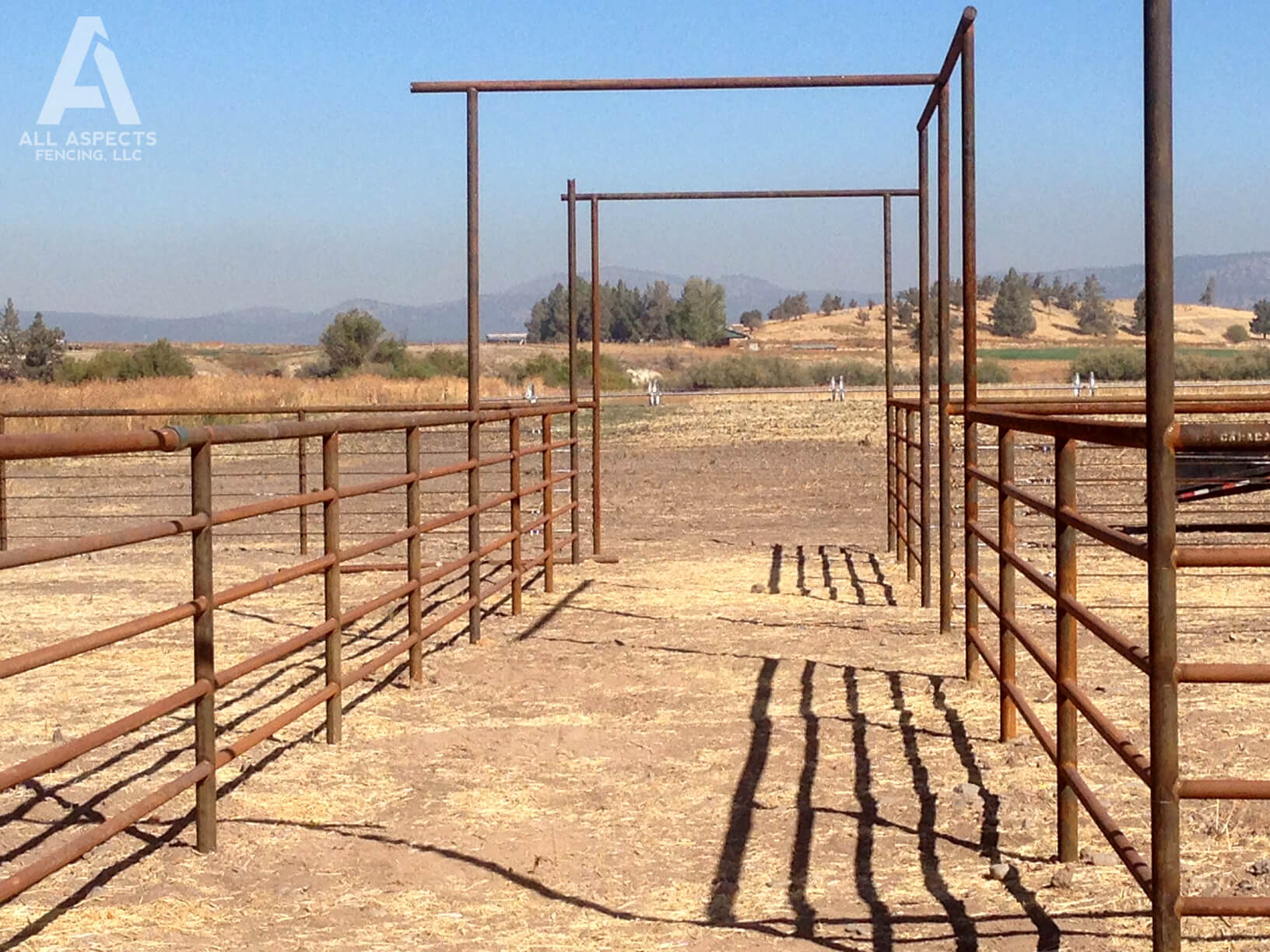
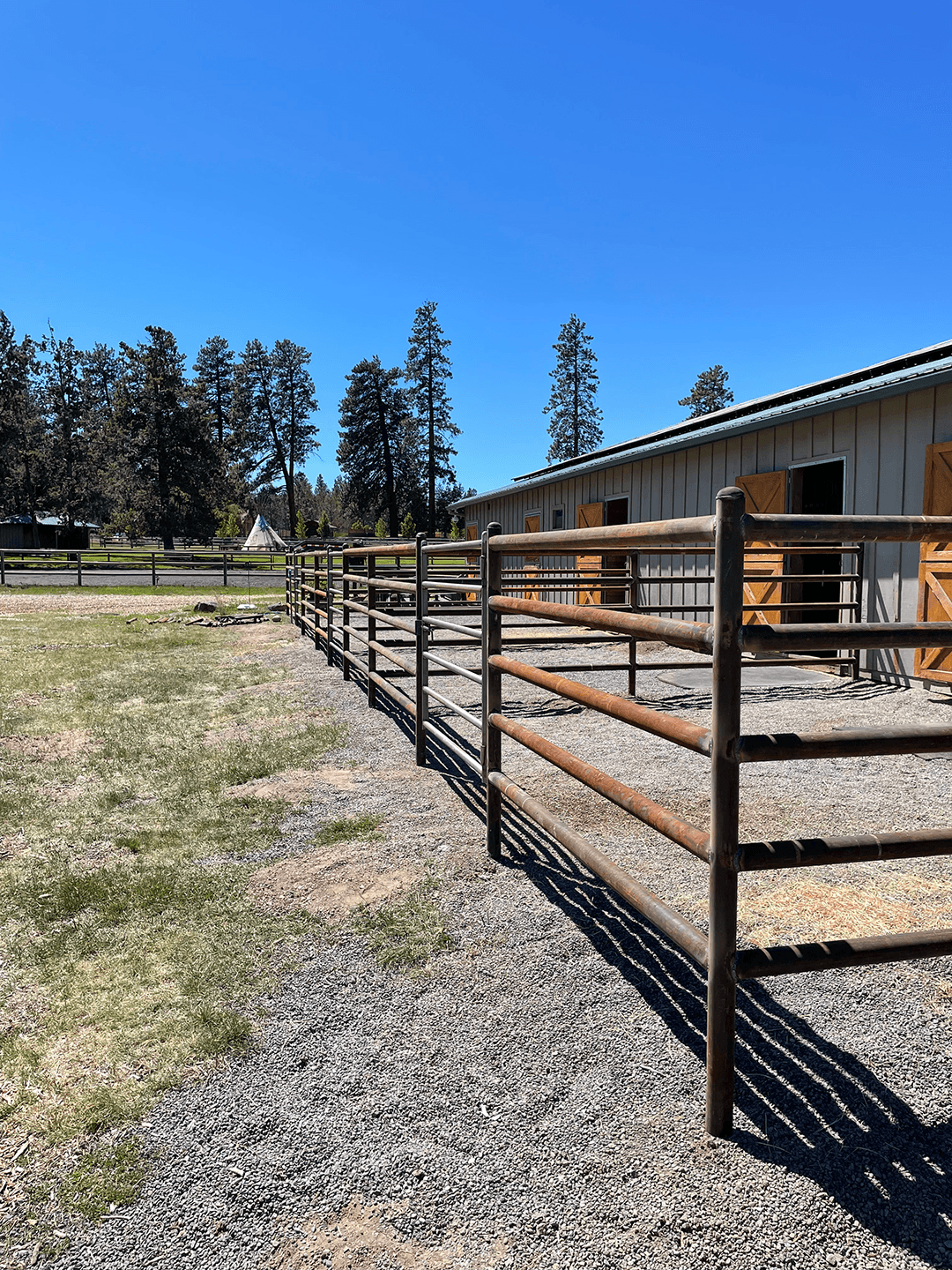
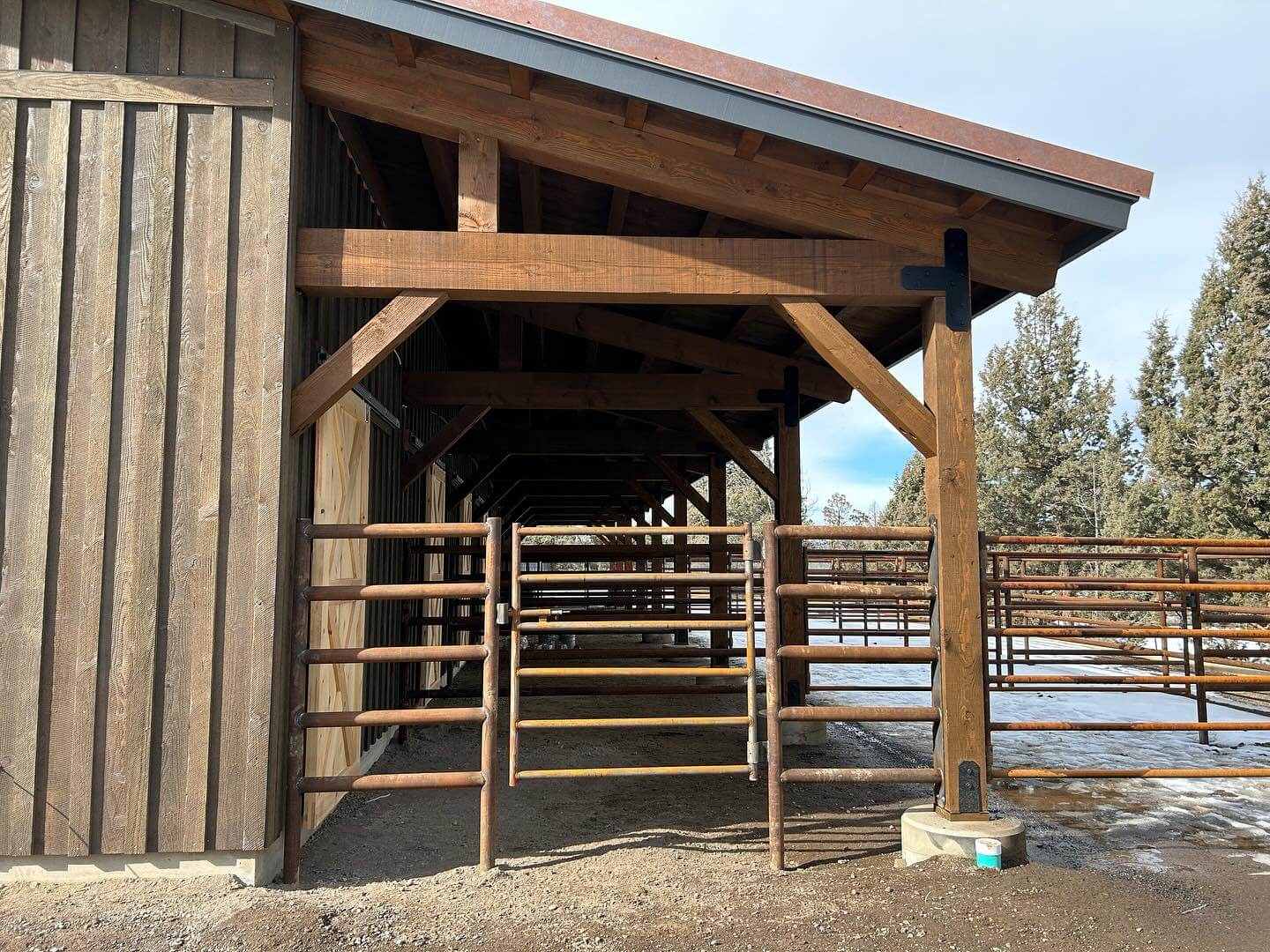
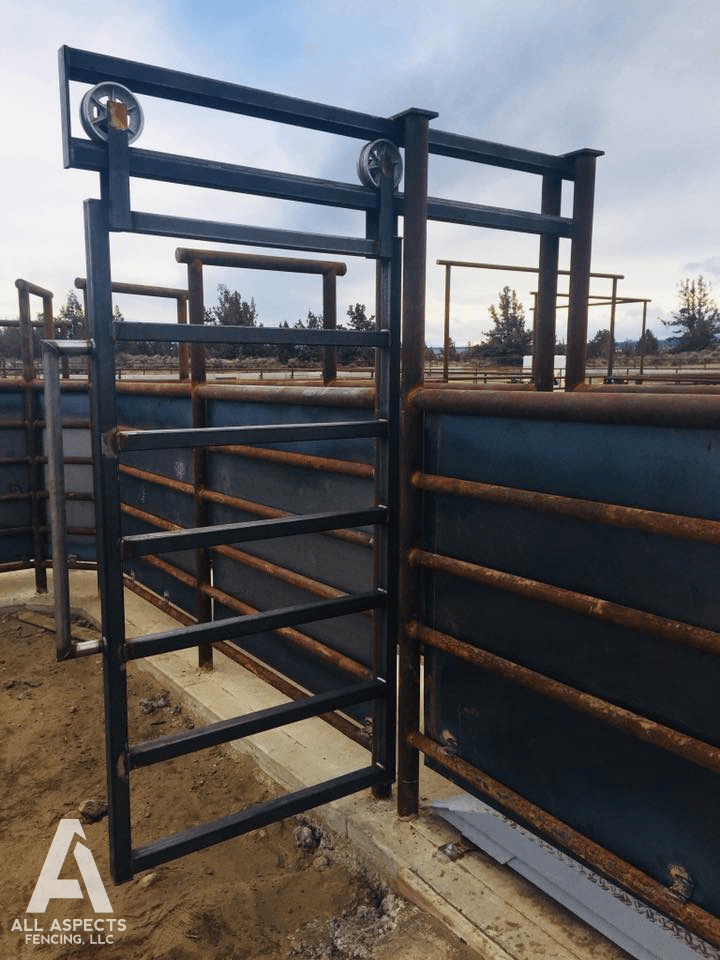
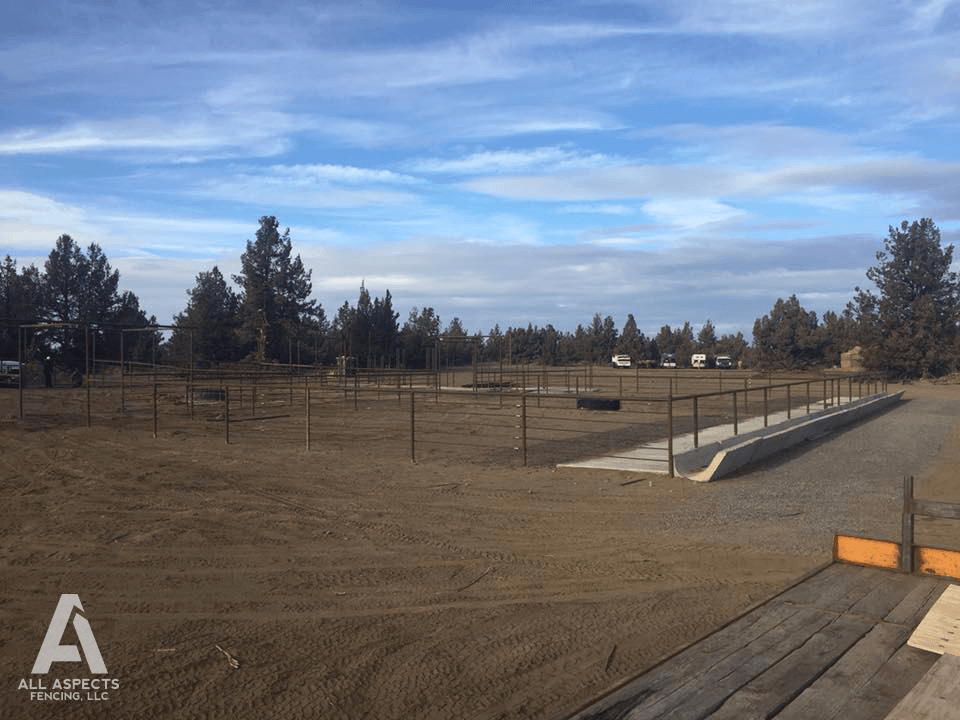
A corral is not just a fence in a circle. Layout, gate placement, panel height, and the radius of any curved sections all affect how well it actually works for sorting, handling, and containing animals. All Aspects Fencing designs corral systems with function in mind and builds them to take the kind of daily abuse that livestock deliver. Welds are tested, gate hardware is heavy-duty, and post spacing is sized for the rail count and animal pressure involved.

ARENAS
ROPING, RIDING AND TRAINING ARENAS
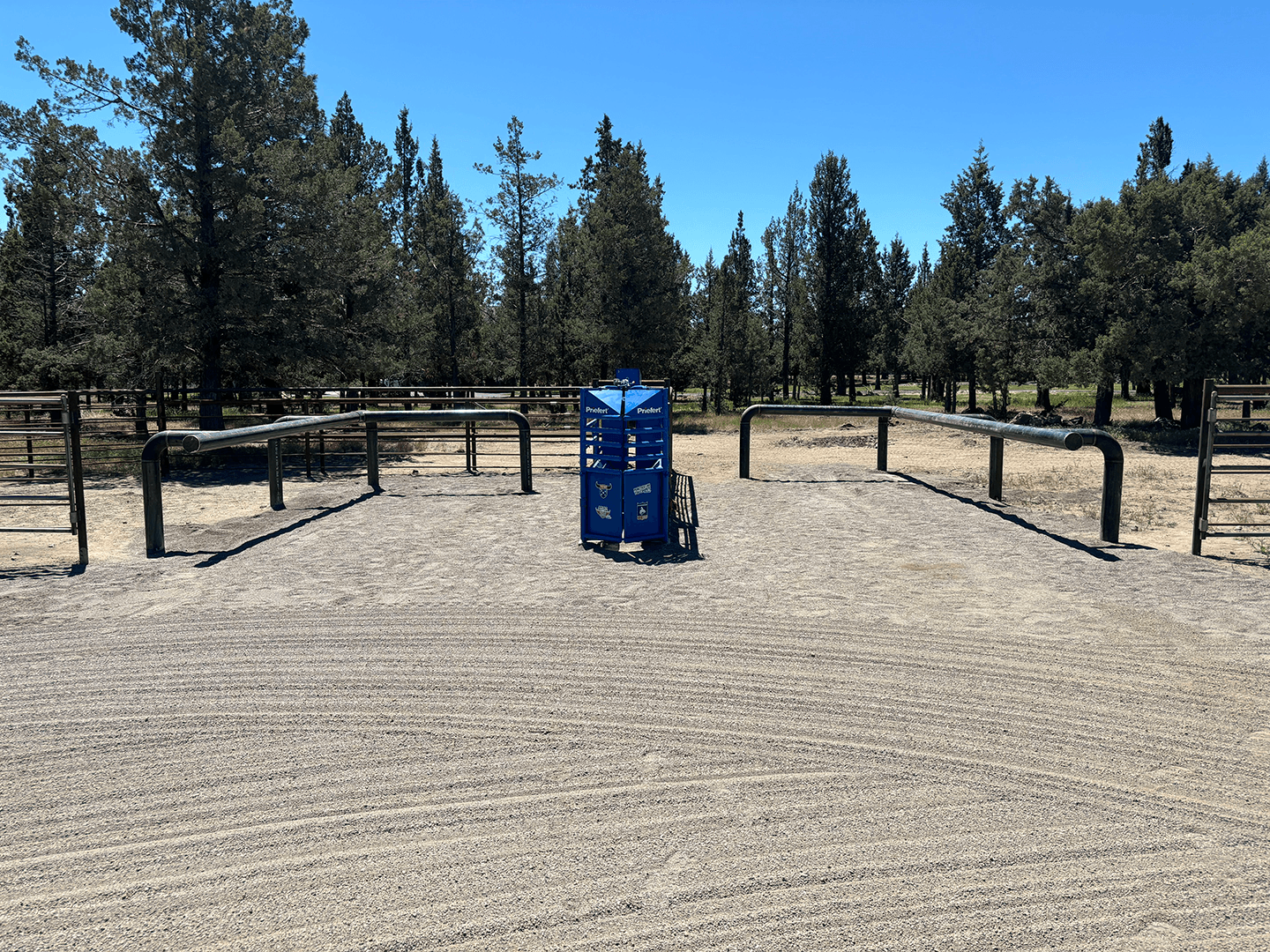
Arena fencing in Central Oregon takes a beating. Rope catches, barrel horses leaning into turns, cattle pushing against the panels during sorting… The fencing has to hold up without flexing or failing. All Aspects Fencing builds roping arenas, riding arenas, and training arenas with the right post spacing, rail count, and panel height for the intended use. We also install timed-event boxes, return alleys, and chute hardware for competitive roping setups.
WORKING CATTLE FACILITIES
SYSTEMS THAT MAKE RANCH WORK EASIER
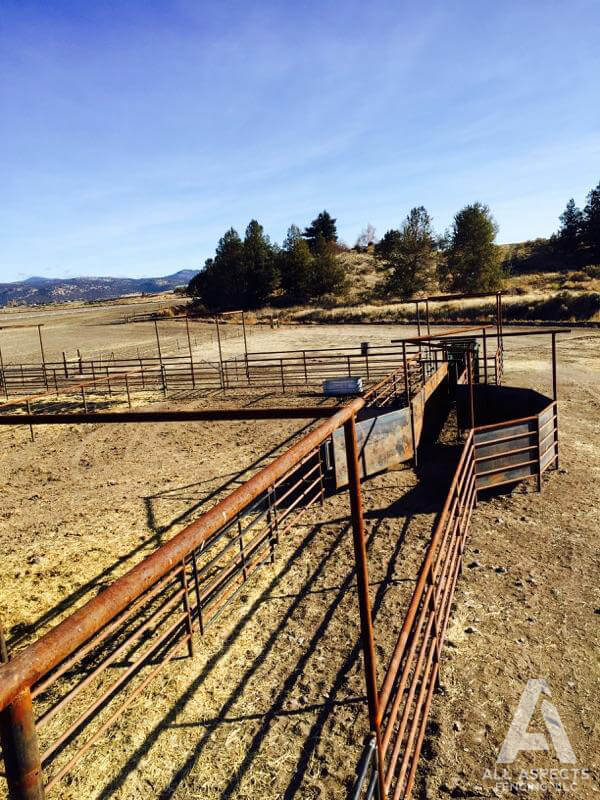
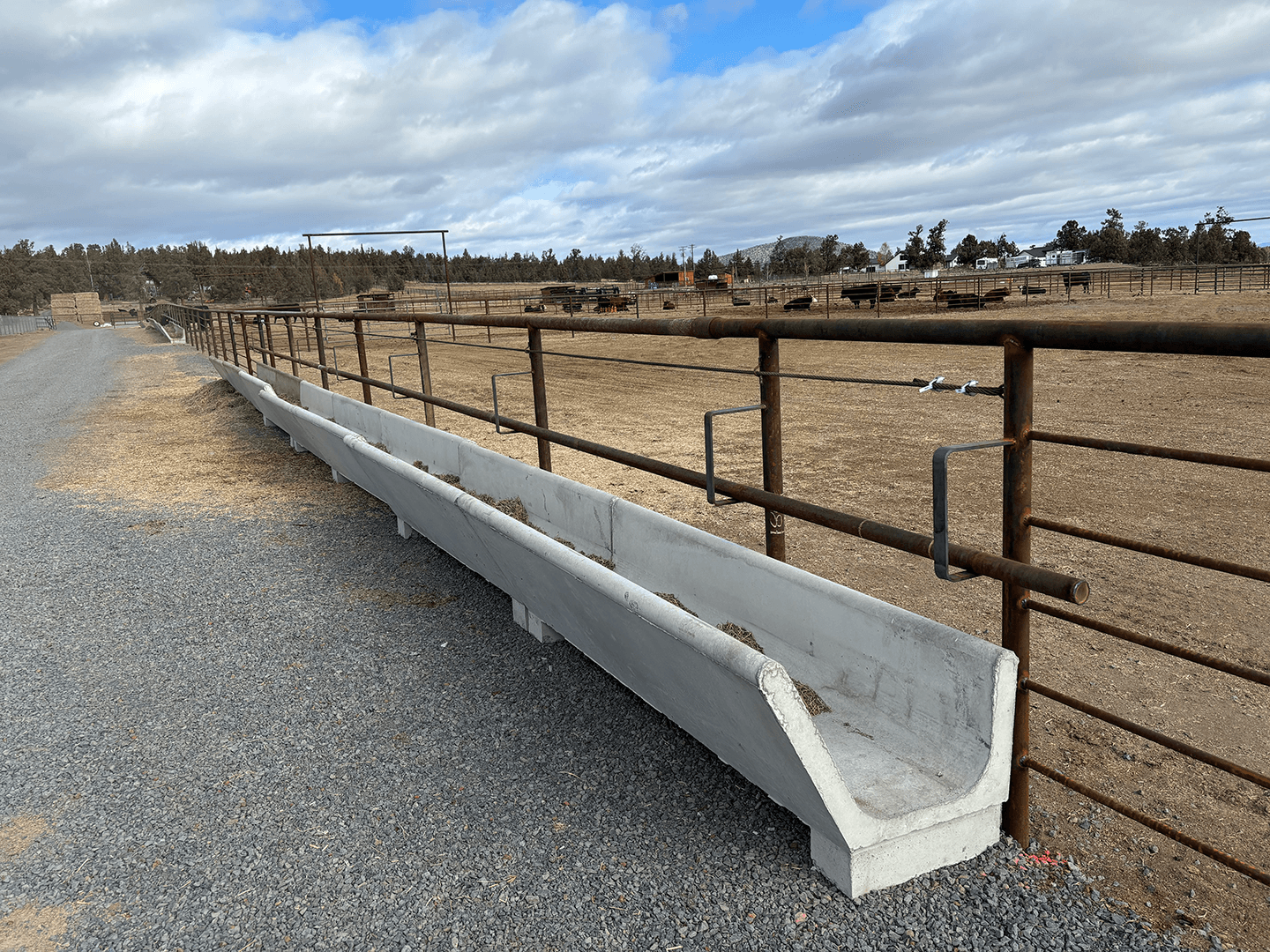
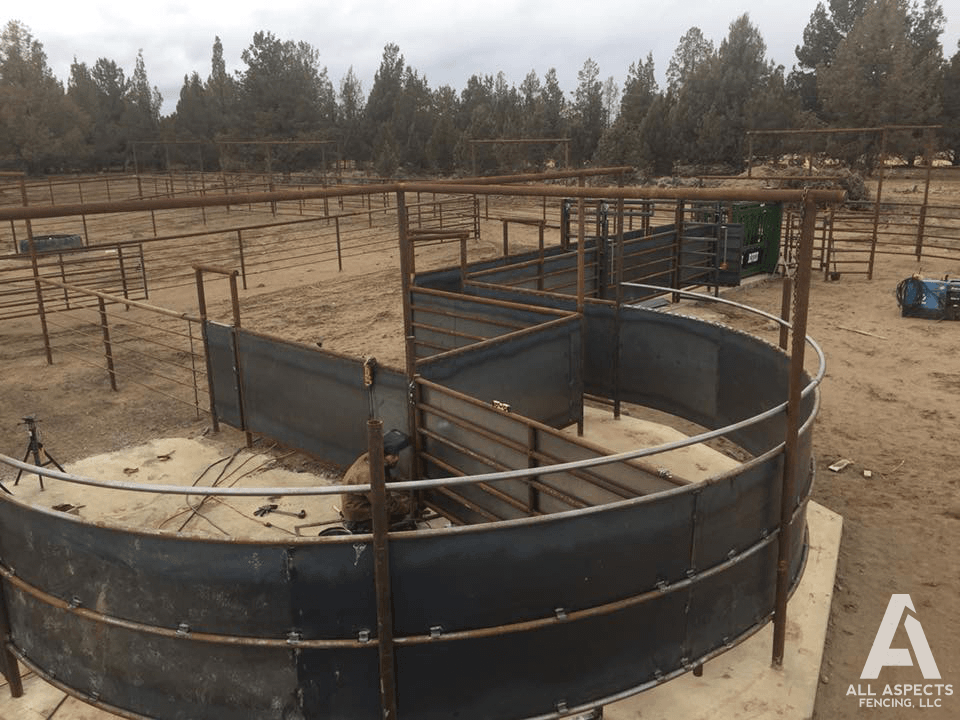
A well-designed working facility reduces the time, labor, and stress of processing cattle. All Aspects Fencing designs and builds complete working setups including crowding tubs, sweep alleys, loading chutes, and feed bunks, all laid out to move cattle efficiently and give the crew room to work safely. We fabricate the steelwork on-site and custom-fit each component to the property and operation.
ON-SITE FABRICATION
We weld it. We drive it. We build it right.
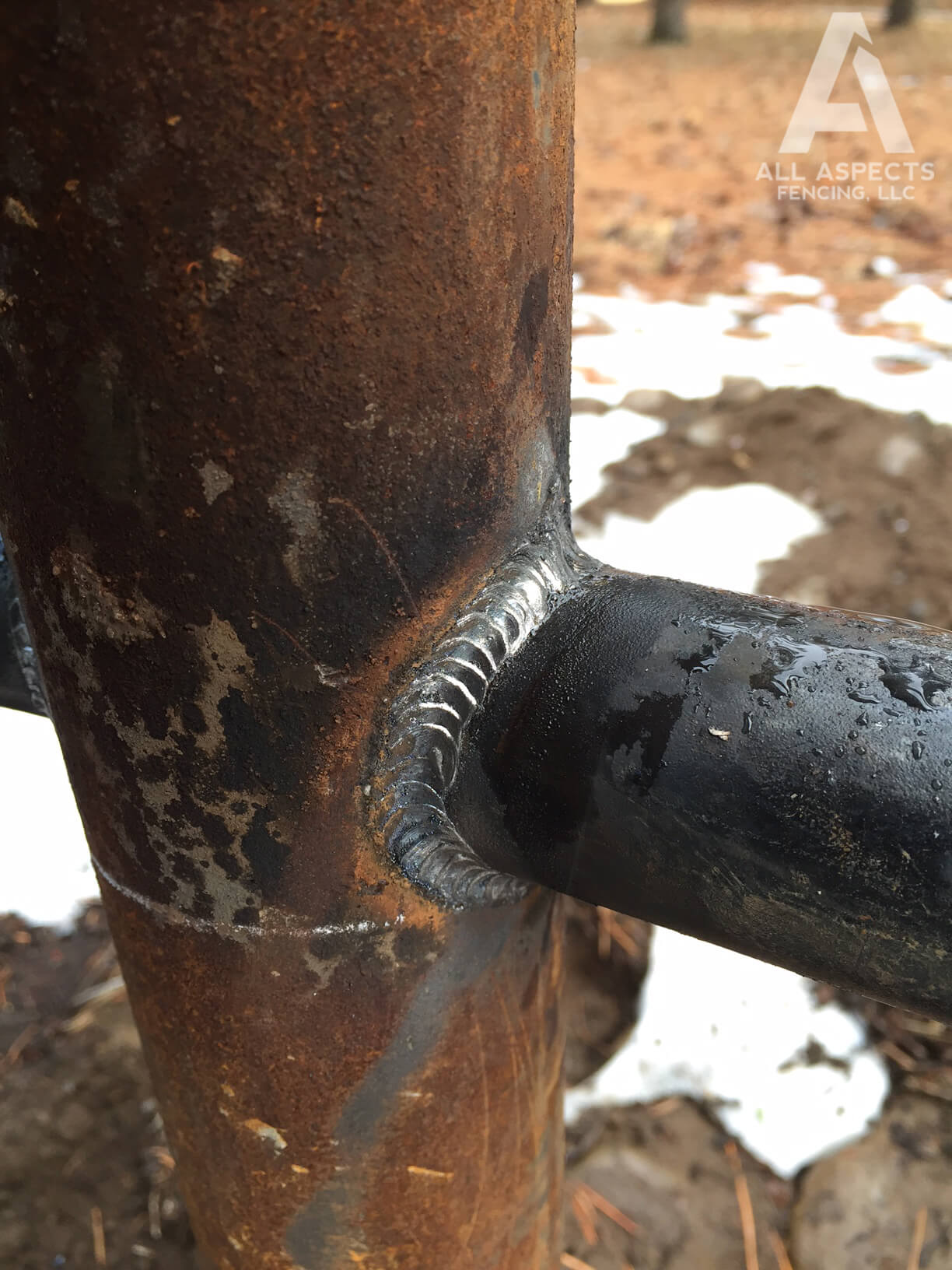
All Aspects Fencing welds on-site. That means joints are cut and fitted to the actual conditions of your property, not pre-fabricated to a generic spec and forced to fit. Every weld is tested before we move on.
Our hydraulic post driver pounds pipe posts directly into the ground without drilling or concrete in most Central Oregon soils. It’s faster, and driven posts often outperform concrete-set posts in the region’s freeze-thaw conditions by allowing slight movement rather than cracking.
WHY ALL ASPECTS FENCING
PIPE FENCE BUILT FOR WORKING PROPERTIES
AGRICULTURAL EXPERIENCE
Jake Robinson grew up on a working ranch. Pipe fence, corrals, and working facilities are not theoretical for us. We understand how these systems are used and what they need to withstand day after day.
DRIVEN OR WELDED
We have the equipment for both installation methods and will recommend the right one for your soil, your application, and your budget. No one-size-fits-all approach.
FULL SYSTEM DESIGN
From a single pasture run to a complete corral, arena, and working facility, we design the whole system before we build any of it. Layout and gate placement matter as much as the steel itself.
COMMON QUESTIONS
PIPE FENCE FAQS
Properly installed pipe fence in Central Oregon will last 40 to 50 years or more. The high desert climate is actually favorable for steel. Low humidity and minimal salt exposure means corrosion is slow. The most common failure mode is post movement from freeze-thaw cycles, which is why post installation method and depth matters as much as the pipe itself. Driven posts in well-drained Central Oregon soils often outperform concrete-set posts over the long term because they can flex slightly rather than crack.
Driven post pipe fence uses a hydraulic post driver to pound the posts directly into the ground without drilling or concrete. Rails are typically attached with clamps or clips. This method is faster and more cost-effective for long perimeter runs. Welded pipe fence involves welding the horizontal rails directly to the posts on-site, which produces a stiffer, cleaner structure. Welded construction is preferred for corrals, arenas, and any application where the fence will take repeated impact from animals. We offer both and will recommend the right approach based on your project.
For horse corrals and pens, 2-3/8-inch OD pipe is the most common rail size and provides a good balance of strength and weight. Posts are typically 2-7/8-inch or larger depending on post spacing and the rail count. For a standard five-rail horse corral, posts on 8-foot centers with 2-3/8-inch rails is a tried-and-true configuration. If the corral will see heavy use from large horses or will be used for sorting and loading, heavier pipe or tighter post spacing is worth the additional cost. We will walk through the options during the estimate.
The most common round pen sizes are 50, 60, and 66 feet in diameter. A 50-foot pen works well for groundwork and starting young horses. A 60-foot pen gives more room for trotting and cantering work. A 66-foot pen is the standard for a full lunge circle and is the preferred size for many trainers. Larger pens (80 to 100 feet) are used for riding and work that needs more space. Height is typically 5 to 6 feet for horses. Let us know how you plan to use it and we will recommend the right size.
Yes. All Aspects Fencing designs and builds complete working facilities including crowding tubs, sweep alleys, loading chutes, processing areas, and feed bunks. We start with a layout that matches your operation. Herd size, processing frequency, and site constraints all factor into the design. Everything is fabricated on-site to fit. If you have an existing facility that needs modifications or additions, we handle that as well.
Sucker rod is the solid steel rod used in oil and gas production to connect the surface pump to the downhole pump. When wells are decommissioned, this rod becomes available as a fencing material. It is heavier and stiffer than standard pipe rail, with a distinctive look from the threaded couplings. Sucker rod fence is popular in parts of Central Oregon where it is regionally available and is valued for its durability and lower cost relative to new pipe. All Aspects Fencing installs sucker rod fence when the material is available and appropriate for the project.
REQUEST A FREE ESTIMATE
READY TO TALK ABOUT YOUR PROJECT?
From a single pasture run to a full corral and arena system, we will design and build it right. Contact us for a free estimate on pipe fence anywhere in Central Oregon including:
- Recommended materials and fence type for your project.
- Anticipated project lead time and estimated installation schedule.
- A detailed breakdown of labor, materials, and overall project costs.