
OUR WORK
CHAIN LINK & SECURITY FENCING
CENTRAL OREGON
CHAIN-LINK & SECURITY FENCING
DURABLE, VERSATILE, AND BUILD TO CURRENT STANDARDS
Chain-link is one of the most practical fencing options available. It’s cost-effective, low maintenance, and adaptable to almost any application. All Aspects Fencing installs chain-link for residential yards, dog runs, recreational courts, commercial properties, and industrial facilities throughout Central Oregon. We stock a range of fabric gauges, post sizes, and heights so the right material goes on the right job.
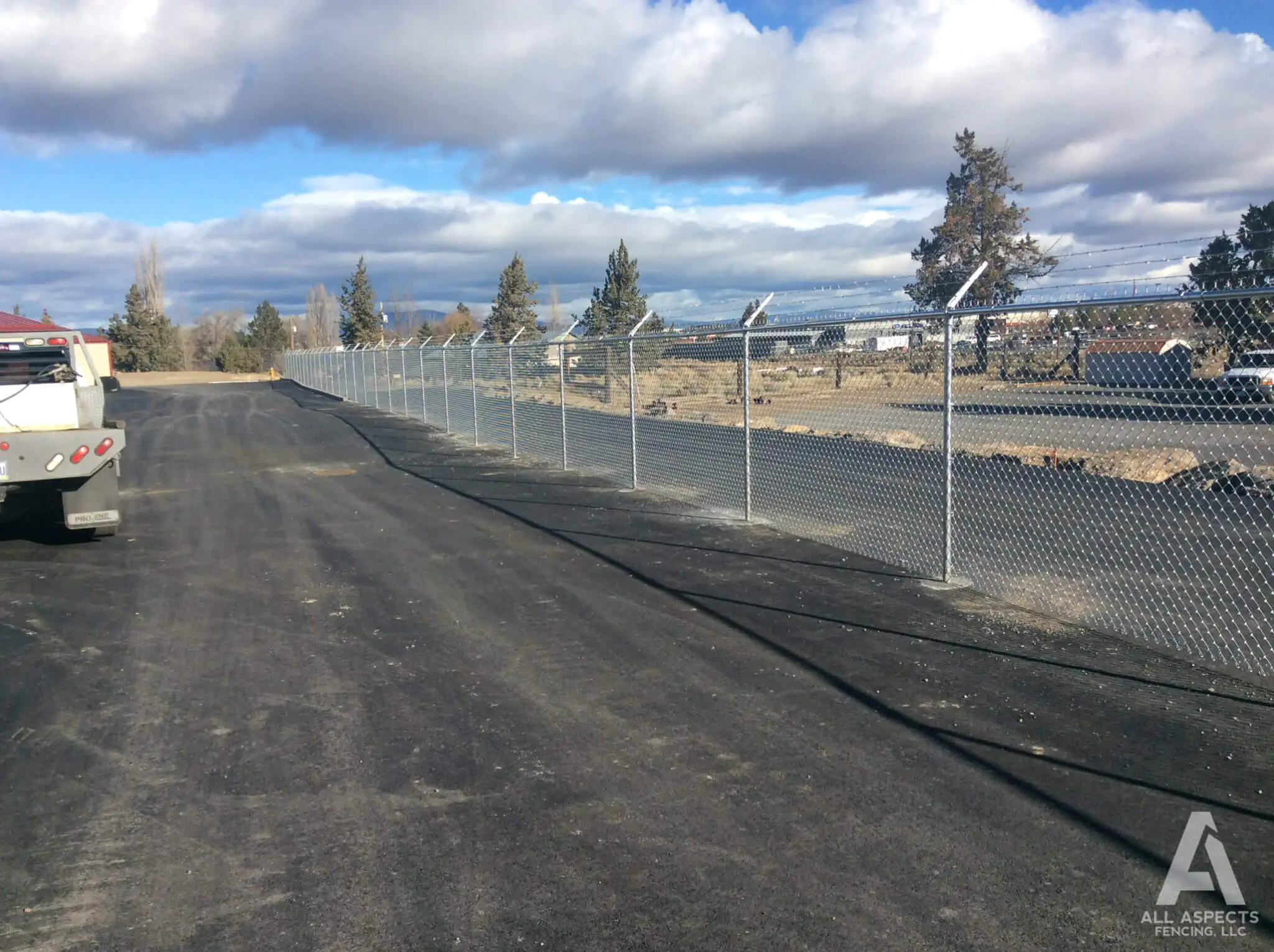
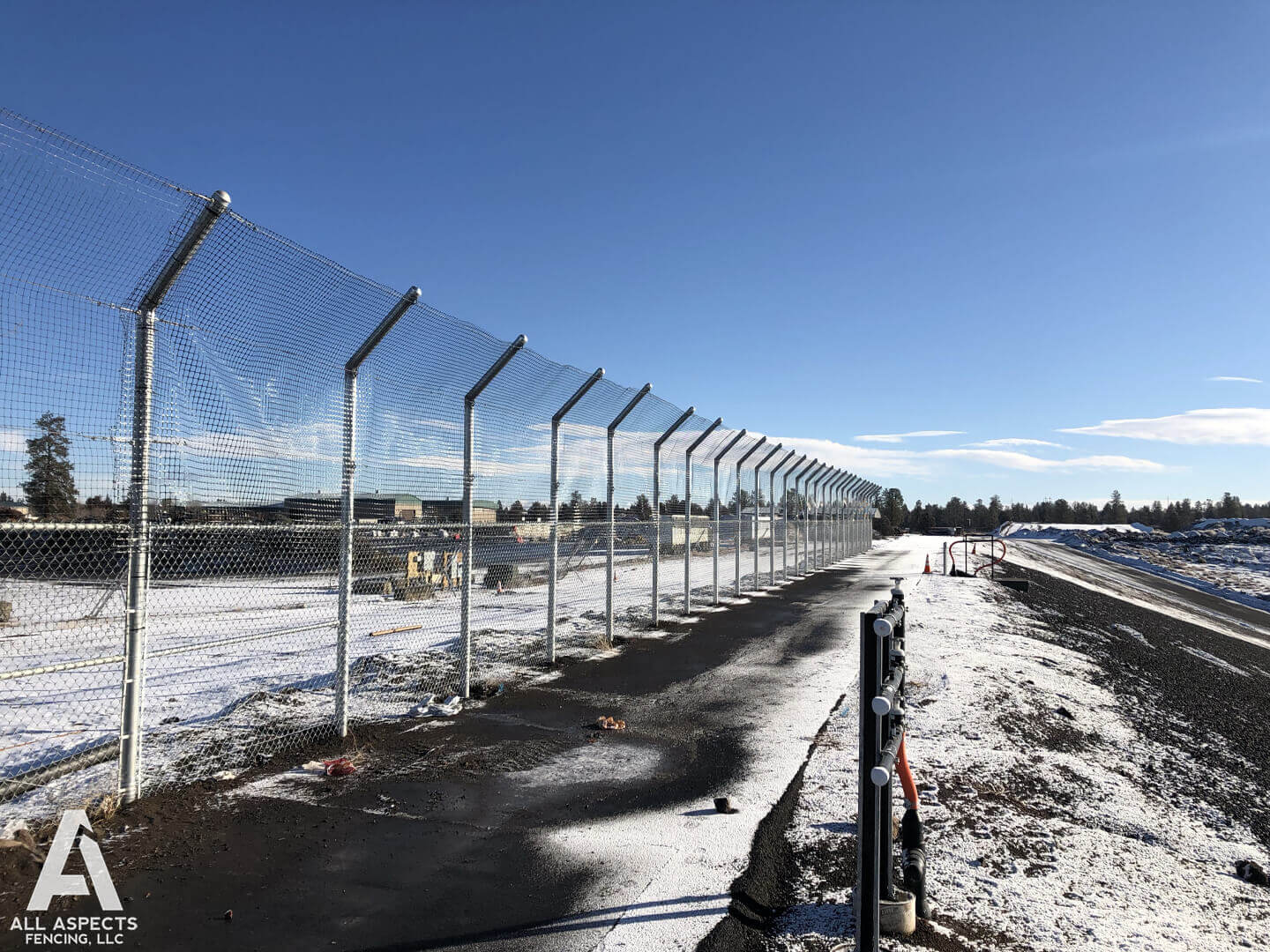
For properties that need more than containment, chain-link forms the backbone of most security fence installations. Post spacing, fabric gauge, overall height, and top treatment all factor into how much deterrent value a fence actually provides. And the right combination depends on what you’re protecting and from what. All Aspects Fencing installs chain-link security fence for equipment yards, commercial facilities, utility sites, and residential properties where access control is a priority.
Every chain-link installation starts with correct post setting. Posts set in undersized holes with insufficient concrete are the most common reason chain-link fails before its time. We set posts to the correct depth for Central Oregon soil and frost conditions, with the right concrete volume for the post size and fence height. The fabric goes up straight and tight, and it stays that way.
SECURITY OPTIONS
CONFIGURING FOR SECURITY
Chain-link becomes a serious security barrier through the right combination of height, fabric weight, and top treatment. We’ll help you configure what the job actually requires.
PROJECT GALLERY
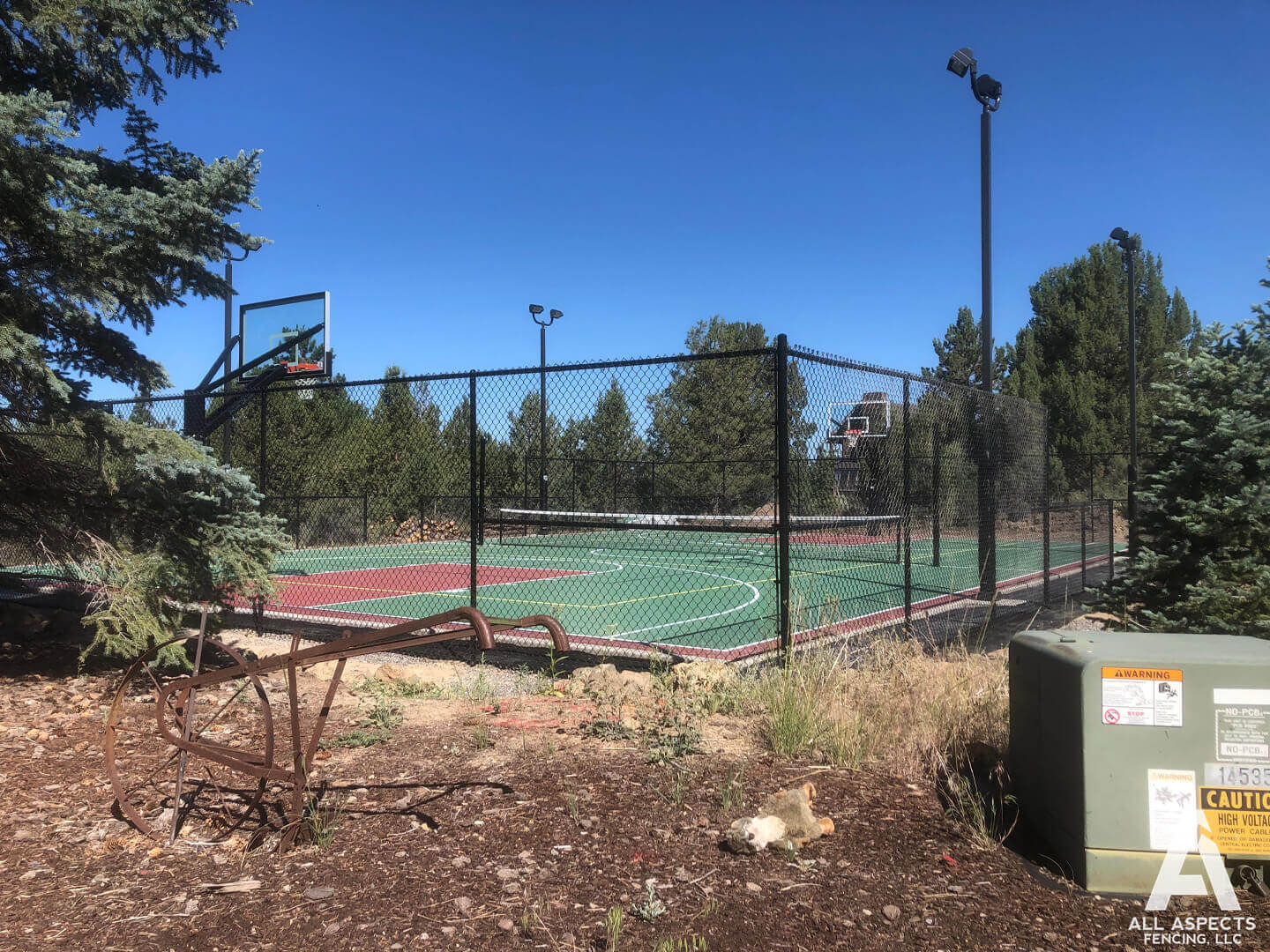
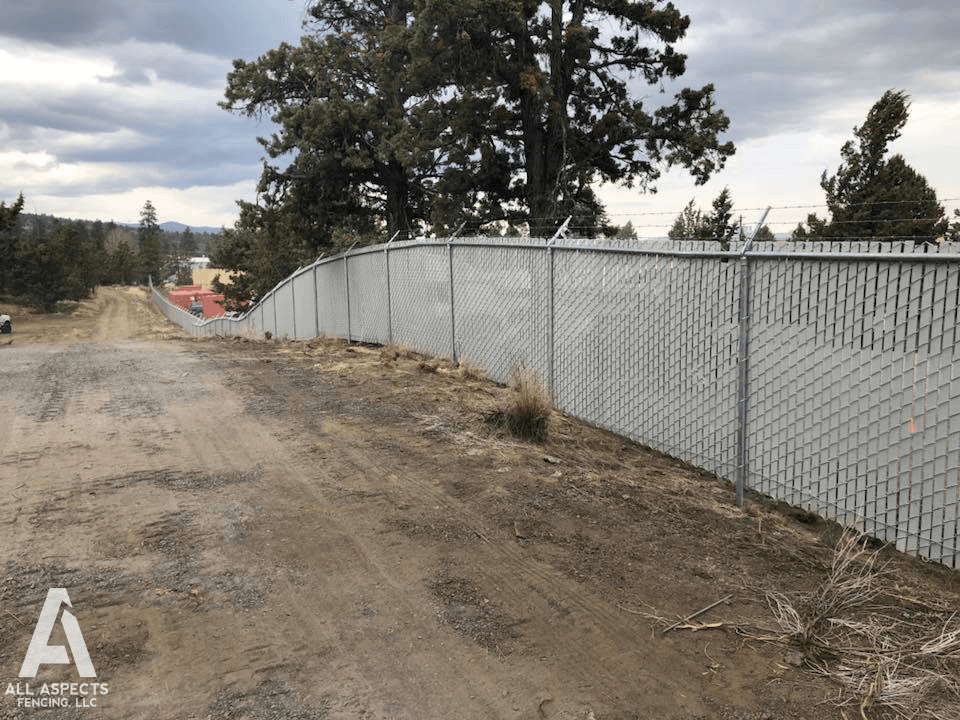
CHAIN-LINK & SECURITY FENCE PROJECTS

WHY ALL ASPECTS FENCING
CHAIN-LINK DONE RIGHT
POST SETTING THAT LASTS
Undersized post holes and thin concrete are the primary reason chain-link fails early. We set posts to the correct depth and diameter for the fence height and local frost conditions. It’s the foundation that keeps everything straight and tight for years.
RIGHT SPEC FOR THE JOB
A dog run doesn’t need the same post size or fabric gauge as an equipment yard perimeter. We match materials to the application so you’re not paying for more than you need, and not getting less than the job requires.
COMMERCIAL & RESIDENTIAL
We work on jobs of all sizes, from a small residential dog run to a large commercial perimeter. The same quality of post setting, fabric installation, and finish work goes into every project regardless of scale.
COMMON QUESTIONS
CHAIN-LINK & SECURITY FENCE FAQS
Chain-link fabric gauge is measured by wire diameter. A lower gauge number means thicker, heavier wire. The most common residential gauge is 11.5, which is adequate for yards, dog runs, and light agricultural use. For commercial applications, equipment yards, or anywhere you want extra stiffness and cut resistance, 9-gauge is the standard upgrade. 6-gauge is available for high-security applications. We’ll recommend the right gauge based on your use case during the estimate.
For most commercial security applications, 6 feet is the minimum, but 8 feet is more effective as a deterrent, and 10–12 feet is common for high-value perimeters or facilities with specific security requirements. Height works in combination with top treatment: a 6-foot fence with a barbed wire outrigger arm provides meaningfully more deterrence than a 6-foot fence without one. Some applications (government facilities, utilities) may have specific height requirements we can help you meet.
Oregon state law generally permits barbed wire on fences enclosing livestock or on agricultural land, but most city and county zoning codes restrict or prohibit barbed wire on residential urban and suburban properties. In Deschutes County, the rules vary depending on your zone. Rural residential and agricultural zones typically allow it, while urban and suburban zones often don’t. We’re familiar with local requirements and will let you know what applies to your specific property before we spec anything.
Galvanized chain-link has a zinc coating applied to the steel, which provides good corrosion resistance and is the standard for most installations. Vinyl-coated chain-link has an additional PVC layer over the galvanized wire, which provides better corrosion resistance, a cleaner appearance, and a color option (typically black or dark green) that blends into landscaping better than bare metal. Vinyl-coated costs more but is a popular choice for residential yards and commercial properties where aesthetics matter. Both hold up well in Central Oregon’s climate.
Yes, and the gate is often the most important part of a security fence installation. A poorly built or hung gate undermines everything else. We install swing gates, double drive gates, and sliding gates in chain-link, sized and framed correctly for the opening and use. Gate posts are set deeper and in larger concrete footings than line posts to handle the added stress of repeated use. If you have specific hardware requirements such as locks, latches, or keyed access, let us know during the estimate and we’ll spec accordingly.
A properly installed galvanized chain-link fence typically lasts 20–30 years or more in Central Oregon’s climate. The high desert environment is actually relatively kind to metal fencing. Low humidity and minimal salt exposure means corrosion is slow. The biggest factor in long-term performance is post setting: posts that heave from frost or lean from wind loading are the most common failure mode. Vinyl-coated fabric tends to last even longer because the PVC layer adds another barrier against the elements.
REQUEST A FREE ESTIMATE
READY TO GET STARTED?
Tell us about your property and security needs and we’ll put together a free chain-link fencing estimate including:
- Recommended materials and fence type for your project.
- Anticipated project lead time and estimated installation schedule.
- A detailed breakdown of labor, materials, and overall project costs.